
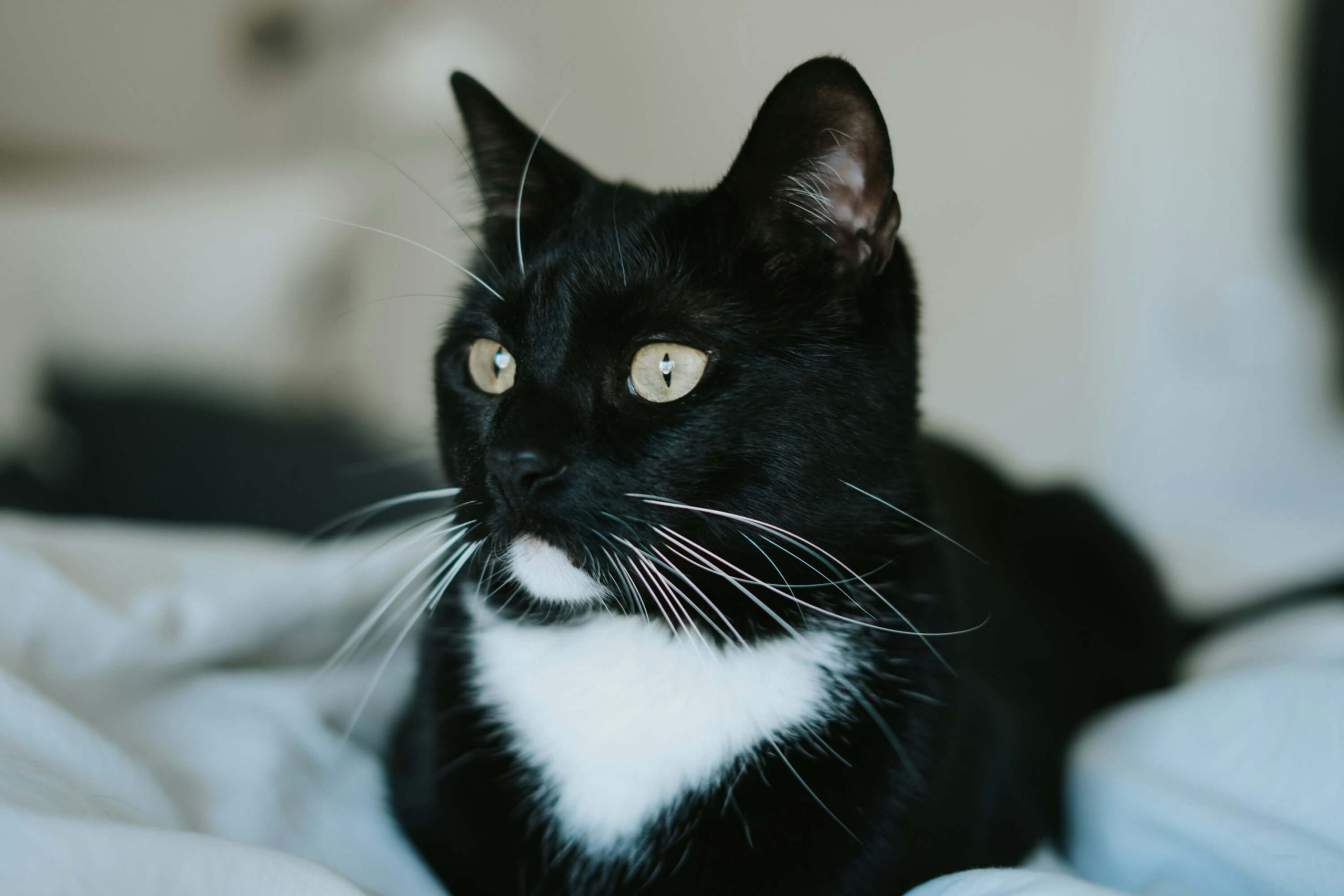
I’ll never forget the moment we decided Wolff was coming with us. It was 2022, and I was on mental health leave from my job at the jail—a difficult period where staying home alone felt impossible, but the world also felt overwhelming. Alicia had her monthly in-office meetings in New Jersey coming up, a trip she couldn’t postpone, and the thought of being separated from both her and Wolff for several days felt unbearable.
“What if we just… brought him?” I suggested tentatively, half-expecting Alicia to laugh at the absurdity of traveling with a cat.
Instead, she looked thoughtful. “Why not? He’s confident. He likes car rides. And honestly, I think you both could use the adventure.”
That conversation launched what would become our unexpected lifestyle: traveling frequently with a tuxedo cat who took to the road like he’d been born for it. What started as a necessity during a difficult time evolved into one of the best decisions we’ve made—not just for my mental health, but for our relationship with Wolff and our understanding of what’s possible when you refuse to accept conventional limitations on pet ownership.
The First Trip: Preparing for the Unknown
That first trip to New Jersey required preparation I’d never considered before. I’d traveled with dogs—that seemed relatively straightforward. Dogs adapted to new environments, enjoyed car rides, and could be walked on leashes. Cats were supposed to be territorial creatures who hated change, stressed easily, and certainly didn’t belong in hotels or on multi-hour car trips.
But Wolff had never been a typical cat. His confidence, his social nature, his general enthusiasm for new experiences suggested he might handle travel better than the conventional wisdom predicted. Still, I wasn’t taking chances. I researched obsessively, joined online forums for people who traveled with cats, and made extensive lists of everything we’d need.
The travel carrier came first—not a cheap plastic airline crate, but a soft-sided carrier designed for comfort during car trips. It had mesh windows on three sides for visibility and ventilation, pockets for storing supplies, and most importantly, it was spacious enough for Wolff to stand, turn around, and lie down comfortably. I set it up in the living room weeks before the trip, leaving it open with a cozy blanket inside, letting Wolff investigate and claim it as his own space.
He loved it immediately. Within days, he was napping in the carrier voluntarily, treating it like a new cat bed rather than a cage. This felt like a good sign.
Next came the practical supplies: a collapsible travel litter box that folded flat for packing, a sealed container of his regular litter, poo bags for waste disposal, his favorite toys, a familiar blanket that smelled like home, collapsible food and water bowls, and enough of his regular food for the entire trip. I packed a first-aid kit specifically for cats, his medical records, and our veterinarian’s contact information. I researched emergency vet clinics along our route and in New Jersey, programming their addresses into my phone.
Alicia watched my preparations with amusement. “You know we’re only going for three days, right? Not embarking on a cross-country expedition?”
“I just want to be prepared,” I said defensively, adding another item to my checklist.
The truth was that the preparation itself was therapeutic. During my mental health leave, I felt unmoored, purposeless. Planning Wolff’s travel setup gave me something concrete to focus on, a problem to solve that felt manageable compared to the larger issues I was facing. Every item I purchased or packed was a small accomplishment, evidence that I could still take care of something, still plan and execute successfully.
The Journey: Discovering Wolff’s Road Warrior Spirit
The morning of departure, I was nervous. What if Wolff panicked in the carrier? What if he meowed continuously for hours? What if this entire plan was a terrible mistake that would traumatize him and make my mental health leave even more stressful?
I placed Wolff in his carrier with some treats, secured it in the backseat with the seatbelt, and braced for disaster.
Wolff settled onto his blanket, looked around with mild interest, and began grooming himself calmly.
We pulled out of the driveway. No meowing. No distress. Just a tuxedo cat, sitting contentedly in his carrier, watching the world pass by through the mesh windows.
“How’s he doing back there?” Alicia asked from the driver’s seat.
I turned to check. Wolff had finished grooming and was now observing the passing scenery with the focused attention of a tourist determined not to miss any landmarks. “He’s… fine. Completely fine. Better than fine, actually. He looks like he’s enjoying this.”
And he was. As the miles passed, Wolff remained calm and curious. He’d watch out the windows for a while, then settle down for a nap. When we stopped for gas, he’d wake up and investigate the new environment visible from his carrier—the different landscape, the new sounds and smells. He seemed fascinated rather than frightened.
About two hours into the drive, I heard a sound from the carrier—not distressed meowing, but Wolff’s distinctive chirp, the noise he made when he wanted attention or had something to say. I reached back and slipped my fingers through the mesh window. Wolff immediately pressed his face against my hand, purring. We stayed like that for several minutes, connected across the space between front and back seat, before he settled back down, apparently satisfied.
“I think he’s doing better than I am,” I admitted to Alicia. My anxiety about the trip had only partially subsided, and the long drive was giving me too much time to think about everything waiting for me back home—the job I’d needed to leave, the mental health struggles I was facing, the uncertainty about my future.
“Then maybe pay attention to how he’s handling it,” Alicia suggested gently. “He’s adaptable. He’s curious about what’s new instead of anxious about what’s different. Maybe there’s something to learn there.”
She was right, though I didn’t fully appreciate the lesson at the time. Wolff was demonstrating a resilience and flexibility I aspired to but hadn’t been able to access. He was in a completely new situation, removed from his familiar territory, and his response was interest rather than fear. I was in a new and unwanted situation myself, and my response had been the opposite.
The Hotel: Wolff’s Palace
Arriving at the hotel in New Jersey, I felt a new wave of anxiety. Would they really allow a cat? I’d booked a pet-friendly room, but what if there were restrictions I hadn’t anticipated? What if Wolff misbehaved and we got kicked out?
The check-in process was smooth—the desk clerk barely blinked at the carrier, simply noting that we had a pet and charging the standard pet fee. We took the elevator to the third floor (Wolff staring out through the mesh at his reflection in the mirrored walls with apparent fascination), found our room, and I unlocked the door with trembling hands.
The moment I opened Wolff’s carrier inside the room, he emerged with the confidence of a hotel inspector conducting a surprise evaluation. He didn’t cower or hide. He immediately began a systematic exploration of his temporary domain, and what he found clearly met with his approval.
The room had a giant window with a wide ledge—perfect for a cat who enjoyed elevated observation posts. Wolff jumped up immediately, surveying the parking lot and surrounding area like a general reviewing his troops. The heavy curtains on either side of the window created ideal hiding spots, little fabric caves he could retreat into when he wanted privacy or when the urge to stalk invisible prey overtook him.
There were two queen-size beds, positioned close enough together that Wolff could jump from one to the other without touching the floor—an arrangement that became his new favorite game. He’d crouch on one bed, wiggle his haunches in preparation, then launch himself across the gap to land on the other bed, often skidding slightly on the slippery hotel comforter. Then he’d immediately turn around and jump back. Back and forth, over and over, entertaining himself thoroughly while Alicia and I unpacked.
“He really likes it here,” Alicia observed, laughing as Wolff executed another flying leap.
“He loves it,” I corrected, feeling some of my anxiety dissolve as I watched him play. If Wolff could adapt this quickly and this enthusiastically, maybe this trip would be okay after all.
But Wolff’s favorite discovery came later that evening. While Alicia showered and I scrolled through my phone, trying not to think about the job and life waiting for me back home, Wolff disappeared under one of the beds. This wasn’t unusual—cats enjoy enclosed spaces. But instead of reemerging from the same side he’d entered, I heard scrambling sounds, and then Wolff’s face appeared from inside the bed itself.
“How did you…?” I got down on my hands and knees to investigate.
The box springs had a small tear in the fabric underneath, apparently from previous guests or general wear and tear. Wolff had discovered it and created his own private cave inside the mattress structure. As I watched, he disappeared back into the box springs, then popped out from a different spot, playing what appeared to be an elaborate game of hide-and-seek with himself.
“Alicia, he’s inside the bed,” I called toward the bathroom.
“What do you mean inside the bed?”
“I mean he’s literally inside the box springs. He found a hole and now he’s living in there.”
Alicia emerged from the bathroom to witness Wolff’s head appearing from underneath the bed skirt, eyes bright with mischief, before disappearing again. We could track his movement through the box springs by the rustling sounds and the slight shifting of the mattress above him.
“Should we stop him?” I asked.
“Why? He’s having fun. And honestly, it’s the most secure, enclosed space in the room. Makes sense that he’d like it.”
So Wolff gained access to both box springs—one under each bed—creating a network of hiding spots and travel routes that apparently represented peak luxury in his estimation. Throughout our stay, he’d periodically vanish into the box springs, sometimes for hours, emerging only for food, water, or to jump on the beds and stare out the window.
The Routine: Creating Normalcy in New Spaces
What surprised me most about that first trip was how quickly we established a routine. Despite being in an unfamiliar environment, despite the disruption to our normal schedule, we found a rhythm that worked for all three of us.
Mornings started with Wolff emerging from wherever he’d spent the night—usually the box springs or the window ledge—and announcing that breakfast was overdue. I’d feed him using his collapsible bowls, the same food he ate at home, maintaining that consistency. While he ate, I’d clean the travel litter box, which he’d used without hesitation or confusion, and refresh his water.
During the day, while Alicia attended her meetings, Wolff and I had the hotel room to ourselves. This time alone together became unexpectedly therapeutic. I couldn’t spiral into anxiety or depression because Wolff demanded interaction. He wanted to play with the toys I’d brought. He wanted me to sit by the window with him and observe the parking lot activity. He wanted attention, petting, conversation.
In taking care of Wolff’s needs—feeding him, playing with him, maintaining his routine—I was forced to maintain my own routine. I had to get up at a reasonable hour. I had to be present and engaged. I couldn’t disappear entirely into the mental health struggles that had necessitated my leave from work. Wolff anchored me to the present moment, to the immediate needs and small pleasures that make up daily life.
We’d explore the room together. I’d drag a string toy around the furniture while Wolff stalked and pounced. We’d have “conversations”—me talking about my anxieties and frustrations, Wolff responding with chirps and meows that I chose to interpret as sage advice. He’d curl up on my lap while I watched television or read, his purring a constant, soothing presence.
When Alicia returned from her meetings each evening, she’d find us in various states of contentment—Wolff on the window ledge watching the sunset, me actually feeling somewhat relaxed, both of us having survived another day away from home.
“How was your day?” she’d ask.
“Good, actually,” I’d answer, surprised to realize it was true. “We had a good day.”
The Revelation: Travel as Therapy
That first trip to New Jersey lasted three days, and by the end, I didn’t want to go home. Not because I’d fallen in love with New Jersey specifically, but because the travel itself had been therapeutic in ways I hadn’t anticipated.
Being away from home meant being away from all the reminders of the job I’d left, the daily routines that had become associated with my struggles. The hotel room was a neutral space, free from emotional baggage and negative associations. It was just a room, and Wolff and I could make it whatever we needed it to be.
The responsibility of caring for Wolff during the trip had also given me purpose and structure when I desperately needed both. At home, my mental health leave had sometimes felt like an endless stretch of unstructured time, days blurring together without clear definition or accomplishment. On the road, every day had clear tasks: feed Wolff, clean his litter, play with him, ensure he was comfortable and happy. These simple responsibilities created a framework for my days.
Most significantly, Wolff’s adaptability and enthusiasm for the new environment had inspired me. If a cat—supposedly a creature of habit who thrived on routine and familiar territory—could embrace change this completely, could find joy and interest in new surroundings, then maybe I could too. Maybe adaptability wasn’t about forcing yourself to be okay with change, but about approaching change with curiosity instead of fear.
“We should do this again,” I said to Alicia on the drive home, Wolff once again settled contentedly in his carrier in the backseat.
“Travel with Wolff?”
“Yeah. I mean, he clearly loves it. And I think… I think it’s good for me. For us.”
Alicia smiled. “Then we’ll do it again. Whenever we have the chance, Wolff comes with us.”
And that’s exactly what we did.
Becoming Frequent Travelers
That first trip in 2022 opened a door we didn’t know existed. Travel with Wolff shifted from a one-time necessity to a regular practice, something we did whenever we had the opportunity. Alicia’s monthly New Jersey meetings became adventures for all three of us. When family invited us to visit, Wolff came along. Weekend getaways, previously cat-free, now included our tuxedo companion.
We refined our packing process, streamlined our supplies, learned which hotels were most cat-friendly and which travel routes Wolff seemed to prefer. We discovered that he loved hotels—loved them with an enthusiasm that seemed disproportionate to what they actually offered, but who were we to question his taste?
Every hotel room became Wolff’s new palace. He’d perform the same inspection routine: immediately check the windows and available ledges, investigate hiding spots, test the beds for jumping potential, and search for access points to box springs (which apparently existed in many hotel beds, to our amusement and occasional concern). Each new environment delighted him, each new space was claimed and explored with the confidence of a cat who knew he belonged wherever he happened to be.
Friends and family found our travel routine amusing. “You travel with your cat?” they’d ask, as if we’d said we traveled with a llama or a peacock—some exotic, impractical animal that had no business on the road.
“Why wouldn’t we?” became our standard response. Wolff was family. We wouldn’t leave a family member home alone for days if we could bring them along. And unlike many pets who merely tolerated travel, Wolff genuinely enjoyed it.
We started documenting our trips—photos of Wolff in various hotel windows, videos of him jumping between beds, snapshots of him investigating new environments with his characteristic curiosity and confidence. We created an Instagram account for his travel adventures: @WolffOnTheRoad. The account gained followers who loved seeing a cat so thoroughly embracing what most cats supposedly hated.
The Mental Health Connection
As we continued traveling with Wolff throughout 2022 and beyond, I came to understand the deeper significance of what we were doing. Yes, bringing Wolff made practical sense—we didn’t have to arrange pet care, we didn’t have to worry about him at home, and he genuinely enjoyed traveling. But the impact on my mental health recovery was profound in ways I was only beginning to articulate.
The trips gave me something to look forward to, breaking up the sometimes monotonous process of healing and recovery. Planning each trip—researching pet-friendly hotels, mapping routes, preparing Wolff’s supplies—provided structure and purpose. The trips themselves forced me out of my head, out of the rumination and anxiety that had characterized my mental health struggles.
Caring for Wolff during travel required presence and attention. I couldn’t be completely absorbed in my own difficulties when Wolff needed feeding, or wanted to play, or was exploring a new space and needed supervision. His needs pulled me into the present moment repeatedly throughout each day, preventing the kind of psychological spiraling that had sometimes overwhelmed me at home.
There was also something healing about Wolff’s approach to new environments. His confidence, his curiosity, his assumption that every new place was simply another interesting space to explore rather than a threat to fear—these qualities modeled an approach to life I was trying to cultivate. Every trip, watching Wolff adapt seamlessly to new surroundings, reminded me that change didn’t have to be traumatic, that unfamiliar environments could be opportunities rather than obstacles.
Alicia recognized this therapeutic dimension before I fully articulated it. “Wolff’s your travel therapy animal,” she observed one evening in a Pennsylvania hotel room, watching Wolff investigate the closet with his usual thoroughness.
“He’s not a registered therapy animal,” I said.
“Doesn’t mean he’s not providing therapy. Look at you—you’re more relaxed on these trips than you’ve been in months. Wolff’s giving you something important.”
She was right. The combination of travel, change of environment, and Wolff’s companionship was profoundly therapeutic. More so than I’d expected, more than traditional therapy alone had achieved, these trips with Wolff were helping me heal.
The Practical Reality: Challenges and Solutions
Traveling with Wolff wasn’t without challenges, and I’d be dishonest if I didn’t acknowledge them. Not every hotel was genuinely pet-friendly—some charged exorbitant pet fees, others had restrictions we didn’t discover until arrival. We learned to call ahead, confirm pet policies, and sometimes advocate firmly for Wolff’s right to stay.
The litter box situation required constant attention. Even with poo bags and careful disposal, hotel bathrooms aren’t ideal locations for cat litter boxes. We developed a routine: litter box in the bathroom, clean it immediately after use, dispose of waste in external dumpsters rather than hotel trash cans, refresh litter frequently. It wasn’t glamorous, but it was manageable.
We also had to be vigilant about Wolff’s access to the hotel room interior. His enthusiasm for exploring box springs was charming but sometimes impractical—we’d have to coax him out before checkout, sometimes waiting while he took his time emerging from his fabric fortress. We learned to check under beds immediately upon arrival, taping up any holes if we were in a hurry or needed Wolff to remain accessible.
Food and water required planning. We always brought enough of Wolff’s regular food for the entire trip plus extra in case of delays. We maintained his feeding schedule as consistently as possible, providing routine and predictability even in changing environments. Water was refreshed frequently, and we’d bring a small supply from home for the first day to avoid any stomach upset from unfamiliar water.
There were also moments of genuine concern. Once, in a Maryland hotel, Wolff managed to slip out the door when a housekeeper opened it without checking. My heart stopped. We found him thirty seconds later, just down the hallway, investigating a room service cart with great interest, but those thirty seconds were terrifying. After that, we were obsessive about door security, always checking that Wolff was secured before opening the door for any reason.
But these challenges were manageable, and the solutions became routine. The benefits—for Wolff, for my mental health, for our family bonding—far outweighed the inconveniences.
What Wolff Taught Us About Cats and Travel
Our experience traveling with Wolff challenged numerous assumptions about cats and their needs. The conventional wisdom says cats are territorial, that they bond with places rather than people, that travel stresses them out and should be avoided except when absolutely necessary.
Wolff proved that at least some cats—particularly confident, social tuxedo cats—can thrive as travelers. He didn’t just tolerate new environments; he actively enjoyed them. Each hotel room was a new adventure, each car ride an opportunity to see new sights. Rather than being stressed by change, he seemed stimulated by it, his curiosity and confidence allowing him to embrace novelty.
This raised interesting questions about how we think about cat welfare. Are we sometimes projecting our assumptions onto cats, deciding they need consistency and routine without actually checking whether individual cats might prefer variety and adventure? How many cats might enjoy travel if given the opportunity, rather than being automatically left home?
Obviously, not every cat is Wolff. We’ve met cats who would absolutely hate travel, who need the security of familiar territory and would be genuinely traumatized by hotel stays and car trips. But we’ve also connected with numerous other travelers who bring their cats along, whose feline companions seem to thrive on the road just like Wolff does.
The key seems to be knowing your specific cat—their personality, their comfort level with new situations, their adaptability. Wolff’s confidence and social nature made him an ideal travel companion. A more anxious or fearful cat would need a different approach, or might genuinely be better off staying home with a pet sitter.
But for cats like Wolff, travel enriches their lives. It provides mental stimulation, new environments to explore, variety that keeps them engaged and interested. It also strengthens the bond between cat and human, creating shared experiences and adventures that go beyond the typical domestic routine.
Looking Forward: A Life on the Road
It’s been over two years since that first trip to New Jersey, and traveling with Wolff has become an integral part of our lives. We’ve visited fifteen states together. Wolff has stayed in dozens of hotels, each one inspected with his characteristic thoroughness and approved for his temporary residence. He’s been a passenger for thousands of miles, always calm, always curious, always ready for the next adventure.
My mental health has improved significantly since 2022, though the journey has been neither linear nor simple. I’m back at work now, at a different job that’s better suited to my needs and mental health requirements. But I credit those early trips with Wolff as crucial to my recovery. They gave me space to heal, purpose during difficult days, and a living example of adaptability and resilience.
Alicia and I now plan trips specifically to give Wolff new experiences. We seek out pet-friendly hotels with good windows, interesting locations, and nearby areas worth exploring. We’ve become advocates for traveling with pets when possible, sharing our experiences and encouraging others to consider bringing their animals along if it suits their personality and circumstances.
Wolff himself seems to have fully embraced his identity as a traveling cat. When we pull out the suitcases, he doesn’t hide or show signs of stress—he gets excited. He knows suitcases mean adventure, mean new places to explore and new windows to survey. He’ll sometimes climb into the suitcases while we’re packing, as if to confirm that he’s definitely included in whatever journey we’re planning.
Looking back, I’m grateful for the circumstances that led to that first trip—even though those circumstances involved mental health struggles I wouldn’t wish on anyone. Sometimes the most important discoveries come from necessity, from being forced into situations we wouldn’t have chosen but that ultimately enrich our lives in unexpected ways.
Wolff didn’t just come along on a trip to New Jersey in 2022. He became our travel companion, my therapy provider, and a constant reminder that adaptability and curiosity can transform potentially stressful situations into adventures. Every hotel room he’s explored, every window ledge he’s claimed, every box spring he’s infiltrated has been part of a larger journey—not just across physical distances, but through mental health recovery, family bonding, and discovering new ways to live with and appreciate the remarkable animals we share our lives with.
The tuxedo cat who loves hotels, who jumps between beds with joyful enthusiasm, who finds adventure in every new environment—he’s taught us that home isn’t just a single place. Home is wherever we are together, whether that’s our apartment or a hotel room three states away. And as long as there’s a good window, a few hiding spots, and ideally some accessible box springs, Wolff is perfectly happy to make anywhere his temporary palace.