
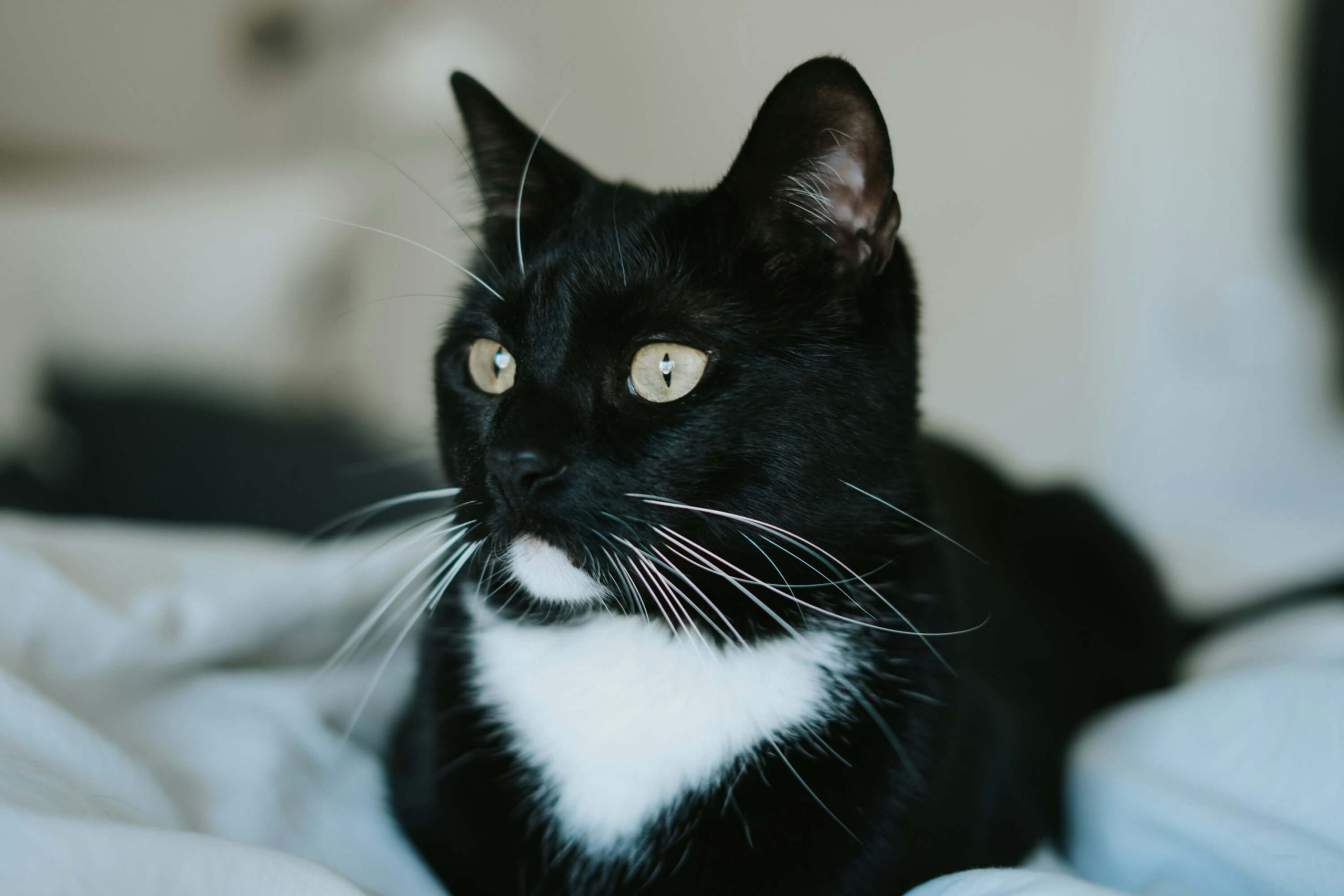
Wolff’s nosiness isn’t casual curiosity. It’s comprehensive, systematic information gathering and territory monitoring. He’s invested in knowing:
- Every vehicle that approaches our street and what they’re doing
- Everything I’m looking at and why it’s interesting
- Every package that arrives and what it contains
- Every person who enters his territory and whether they’re trustworthy
- Every change to our home environment, no matter how small
This isn’t random cat behavior. This is intelligence work. Surveillance. Information gathering. Territory management.
And Wolff is better at it than I ever was, even with 30+ years of professional experience in observation and assessment.
Why Tuxedo Cats Are So Nosey
Through research and observation, I’ve come to understand why tuxedo cats like Wolff are so extremely nosey:
High Intelligence: Tuxedo cats are known for above-average intelligence. Smart cats are curious cats, invested in understanding their environment comprehensively.
Strong Territorial Instincts: As discussed in previous articles, tuxedo cats are intensely territorial. Nosiness serves their territorial management—they need to know everything happening in their territory.
Dog-Like Personalities: Tuxedo cats often exhibit dog-like traits, including intense interest in their human’s activities and investment in household happenings.
Social Intelligence: Tuxedo cats are more socially engaged than many cats. They care about who’s approaching, what’s happening, what changes mean for their social structure.
Confident Nature: That famous tuxitude includes confidence to investigate rather than hide. Where timid cats might retreat from changes or visitors, tuxedo cats investigate.
All of these factors combine to create cats who are phenomenally, comprehensively, almost comically# Tuxedo Cats Are Very Nosey Cats: 5 Instances That Occurred When I Realized Wolff Was Nosier Than I Was
I thought I was a nosey person. Thirty-plus years in public service taught me to be observant, to notice details, to pay attention to what was happening around me. I prided myself on being aware, engaged and tuned in to my environment.
Then I retired and started spending more time at home with Wolff. That’s when I discovered something humbling: my tuxedo cat was nosier than I’d ever been.
The moment this became undeniable was on a quiet Tuesday afternoon about three months into retirement. I was sitting in my living room reading, completely absorbed in my phone, when I heard a car pull up outside.
I barely registered the sound. Cars pull up on my street all the time. I didn’t even look up from my page.
But Wolff? Wolff launched himself off the couch like he’d been shot from a cannon, sprinted across the living room out onto the enclosed patio, and positioned himself to see what was going on—all within about five seconds.
I looked up, startled by the sudden commotion. “Wolff? What’s going on?”
Then I heard him—a series of urgent chirps and chatters, the sounds he makes when something interesting is happening and he absolutely must know what it is.
Curious now, I got up and walked to the patio. Wolff, his entire body tense with focus, watching a delivery truck that had pulled up two houses down. Not at our house. Not even our next-door neighbor. Two houses down.
He was tracking the delivery person’s every movement—watching them get out of the truck, walk to the house, ring the doorbell, wait, hand over the package, walk back to the truck, get in, and drive away. His head moved like he was watching a tennis match, following every detail.
When the truck finally drove out of sight, Wolff made one final commentary chirp—his “well, that was interesting” sound—and then trotted back inside like he’d just completed an important surveillance mission.
I stood there on my patio, stunned. I hadn’t even bothered to look out the window when I heard the car. But Wolff had immediately investigated, tracked the entire situation from start to finish, and clearly filed away every detail of the event.
That’s when it hit me: Wolff wasn’t just curious. He was the neighborhood watch, the surveillance system, the intelligence officer. He was nosier than any human I’d ever met, including myself.
And that was just the beginning of understanding how incredibly nosey tuxedo cats really are.
The Wake-Up Call: When I Realized I Was Living with a Feline Investigator
For the first few years with Wolff, I’d noticed his curiosity. He liked to watch things. He paid attention to sounds. He investigated new objects. Standard cat behavior, I thought.
But I’d been missing the full picture. Wolff wasn’t just casually curious like most cats. He was actively, intensely, comprehensively nosey about everything happening in, around, and near our home.
Nothing escaped his notice. No sound went uninvestigated. No movement outside went unobserved. No change in routine went undetected.
He was running a full-time intelligence operation, and I’d been completely oblivious to it.
Why I’d Been Missing It
Looking back, I can see exactly why I’d underestimated Wolff’s nosiness for so long:
I was busy. During my working years, I was often distracted by work stress, planning, mental to-do lists. I wasn’t paying attention to what Wolff was paying attention to.
I had assumptions. I thought cats were curious about some things but generally aloof and uninterested in human activities. I didn’t expect a cat to be invested in neighborhood happenings.
I wasn’t home enough. Working full-time meant I missed most of Wolff’s daytime surveillance activities. I didn’t realize how much he monitored because I wasn’t there to see it.
I underestimated him. I thought of Wolff as “my cat” rather than as an intelligent being with his own interests, investigations, and information-gathering operations.
Retirement changed everything. Suddenly I was home all day, every day, able to observe Wolff’s full range of behaviors. And what I discovered was both hilarious and humbling.
My Six-Month Journey Into Understanding Just How Nosey Tuxedo Cats Really Are
What I’m about to share took me six months of careful observation, numerous “you’ve got to be kidding me” moments, and a complete transformation in how I understood Wolff’s personality and daily activities.
Tuxedo cats are known for being confident, intelligent, and dog-like in their behaviors. But what I discovered is that they’re also phenomenally nosey—invested in knowing everything happening in their territory and beyond.
Here are five specific instances that made me realize Wolff was nosier than I was, and what each one taught me about living with an extremely nosey tuxedo cat.
Instance #1: The Delivery Truck Surveillance Operation (Running Outside to See Who Just Pulled Up)
How I Discovered Wolff’s Vehicle Monitoring System
The delivery truck incident I mentioned in the opening wasn’t a one-time thing. It was my first glimpse into a comprehensive, daily operation that Wolff runs like a military intelligence officer.
Once I started paying attention, I realized Wolff has a sophisticated system for monitoring every vehicle that approaches our street:
Phase 1: Detection The moment a car turns onto our street—sometimes before I can even hear it—Wolff’s ears perk up. His head turns toward the sound. He’s on alert.
Phase 2: Assessment As the vehicle gets closer, Wolff determines threat level and interest level:
- Familiar car (neighbor’s vehicle): low interest, casual observation
- Unfamiliar car: moderate interest, more focused attention
- Delivery truck/service vehicle: high interest, immediate investigation required
Phase 3: Investigation For high-interest vehicles, Wolff springs into action. He runs to the nearest window or, more often, bolts through his cat door onto the enclosed patio for the best vantage point.
Phase 4: Surveillance He watches the entire situation unfold—who gets out, where they go, what they’re doing, how long they stay, when they leave.
Phase 5: Report Filing After the vehicle leaves, Wolff makes commentary chirps—I swear he’s mentally filing a report of the incident—before returning to whatever he was doing before.
The Day I Actually Tested His Detection Range
About a month after the delivery truck revelation, I got curious about exactly how far away Wolff could detect approaching vehicles.
I started paying attention to the timing: when did Wolff react versus when did I first hear a vehicle?
The results were stunning. Wolff consistently detected vehicles a full 10-15 seconds before I could hear them. Sometimes he’d already be on his way to the patio before I registered any sound at all.
One afternoon, I decided to test this. I heard a car in the distance and started counting: “One, two, three…” At “seven,” Wolff’s ears turned. At “ten,” he was up and moving. At “twelve,” I could finally hear the vehicle clearly.
He beat me by five full seconds on detection, every single time.
How? Better hearing, certainly. But also—and this is the nosey part—he was listening for vehicles constantly. He was running continuous surveillance while I was oblivious unless a sound was loud or unusual.
What He’s Actually Monitoring
Through careful observation, I’ve documented what Wolff considers surveillance-worthy:
All Delivery Vehicles: These are top priority. UPS, FedEx, Amazon, mail carrier—Wolff watches every single one. He needs to know what they’re delivering, to whom, and why they’re in his territory.
Unfamiliar Cars: Any vehicle he doesn’t recognize gets immediate investigation. Who is this? Why are they here? What are their intentions?
Service Vehicles: Repair trucks, landscaping companies, moving vans—these trigger intensive monitoring. Changes to the neighborhood environment are serious business.
Neighbor Vehicles with Unusual Patterns: If a neighbor’s car comes home at an unexpected time or parks in an unusual spot, Wolff notices and investigates.
Emergency Vehicles: Police, fire, ambulance—these get the most intense surveillance. Wolff is visibly agitated by these, chattering urgently while tracking their every movement.
The Most Dramatic Surveillance Incident
The most intense example of Wolff’s vehicle monitoring happened about four months into my observation period.
It was 10 PM, and I was getting ready for bed. Wolff was already settled in his usual spot at the foot of my bed. The neighborhood was quiet.
Then I heard a car approaching—unusual for that time of night on our quiet street. Before I could even process the sound, Wolff was up and racing downstairs. I heard him push through his cat door onto the patio.
Then he started making sounds I’d never heard before—urgent, loud chattering mixed with low growls. Something was wrong.
I went downstairs and out to the patio. Wolff was pressed against the screen, tail puffed, making continuous agitated sounds while watching a car slowly cruising down our street with its headlights off.
The car stopped across the street, idled for a moment, then drove away slowly.
Wolff watched until it was completely out of sight, then continued making agitated sounds for several minutes afterward.
The next morning, I learned from a neighbor that several cars on our street had been broken into that night. The car Wolff had been so agitated about was likely the suspects scoping out the area.
Wolff had detected suspicious activity and raised the alarm. His nosiness had identified a genuine threat that I would have completely missed if I’d been alone.
After that incident, I stopped thinking of Wolff’s vehicle surveillance as just nosiness. It was security. Intelligence gathering. Neighborhood watch. He was protecting his territory by knowing exactly what was happening in it.
How I’ve Adapted to His Surveillance Operations
Understanding Wolff’s vehicle monitoring system has changed how I respond:
I don’t interrupt his surveillance: When Wolff runs to investigate a vehicle, I let him complete his observation. It clearly matters to him, and interrupting creates anxiety.
I pay attention to his alerts: If Wolff is unusually agitated about a vehicle, I now investigate too. His threat assessment is often more accurate than mine.
I acknowledge his reports: When he returns from surveillance making commentary chirps, I respond: “I know, buddy. A delivery truck. Thanks for keeping watch.” This seems to satisfy his need to report findings.
I appreciate the service: Wolff is essentially providing 24/7 security monitoring. That has value, even if it sometimes seems excessive.
Instance #2: Standing on Hind Legs Alongside Me (Watching Something Going On Outside Together)
The First Time I Realized We Were Surveillance Partners
This instance happened about four months into retirement, and it fundamentally changed how I understood Wolff’s nosiness.
I was standing at my kitchen window, watching some activity in my neighbor’s yard—they were having a tree removed, and the tree service had arrived with a big truck and equipment. I was idly watching while waiting for my coffee to brew.
Suddenly, I felt something against my leg. I looked down, and Wolff was standing on his hind legs right next to me, his front paws braced against the wall, stretching himself up as tall as possible to see out the window.
We were standing there together—both of us on our hind legs (well, my hind legs are just called legs, but you get the idea), both watching the same scene, both completely focused on what was happening outside.
“You want to see what’s going on too?” I asked, surprised.
Wolff made a soft chirp—his “yes, obviously” sound—and continued watching intently.
I crouched down and picked him up so he could see more easily. He settled into my arms, completely focused on the window, and we watched together for the next ten minutes while the tree service set up their equipment.
When they took a break, Wolff jumped down, satisfied with his observation session. He’d wanted to know what was happening, and standing alongside me was the best way to get a good view.
How Often This Actually Happens
Once I started noticing this behavior, I realized it happened constantly—at least 2-3 times a day, often more.
Any time I stand at a window looking out, Wolff appears within seconds and stands on his hind legs next to me. He’s not asking for attention. He’s asking for visual access to whatever I’m looking at.
Morning Window Watching: I often stand at my bedroom window in the morning, watching birds at the feeder. Wolff joins me, stretching up to see, occasionally chirping at particularly interesting birds.
Kitchen Window Surveillance: The kitchen window overlooks the street. When I stand there while cooking or doing dishes, Wolff stations himself on his hind legs next to me, monitoring street activity.
Patio Door Observations: Any time I stand at the patio door looking at the backyard, Wolff is there, standing tall to see what captured my attention.
Living Room Windows: If I walk to the living room window to check on something outside, Wolff immediately joins me in observation mode.
What Makes This Different from Solo Watching
Wolff watches out windows on his own all the time. But there’s something specifically different about when he joins me:
He seeks my vantage point: He doesn’t just watch from a window. He positions himself right next to me, trying to see from my perspective.
He stays as long as I stay: When watching on his own, Wolff might observe for a minute or two and move on. When watching with me, he’ll stay as long as I’m interested, sometimes 10-15 minutes.
He seems to value shared observation: There’s a quality to these moments that feels like partnership—we’re investigating together, sharing the experience of watching something interesting.
He makes more commentary: When watching alone, Wolff is usually silent. When watching with me, he makes frequent chirps and chatters, as if discussing what we’re seeing.
The Most Memorable Shared Observation
The most striking example of this behavior happened about five months into my observation period.
It was late afternoon, and I was standing at my living room window watching an intense sunset—brilliant oranges and pinks, the kind of sunset that makes you stop and stare.
I wasn’t watching for anything specific, just appreciating the beauty. But Wolff appeared next to me, stood on his hind legs, and watched too.
We stood there together for several minutes, both watching the changing colors. Wolff was completely still, focused, taking it in.
I know cats probably don’t appreciate sunsets the way humans do. But Wolff was clearly interested in whatever had caught my attention enough to make me stand and watch. His nosiness extends even to aesthetic experiences—if I’m watching it, he wants to see it too.
When the colors finally faded, I looked down at him. “Beautiful, wasn’t it?”
He made a soft trill and went back to his other activities, satisfied.
What This Revealed About Tuxedo Cat Nosiness
This behavior taught me something profound about the nature of Wolff’s nosiness: it’s not just about gathering information independently. It’s also about shared investigation and observation.
Wolff doesn’t just want to know what’s happening. He wants to know what I’m interested in, what I’m paying attention to, what has captured my focus enough to make me stand and watch.
This is collaborative nosiness—a desire to share observation and investigation with his chosen human. It’s remarkably dog-like behavior, and it’s absolutely characteristic of tuxedo cats.
How I’ve Embraced Shared Observation
Understanding this behavior has changed how I interact with Wolff:
I narrate what I’m watching: “See that? The neighbors are getting a new roof. That’s why all those trucks are here.” Does Wolff understand? No. But he seems to appreciate being included in the observation.
I pick him up for better views: When something particularly interesting is happening, I lift Wolff up to window height so he can see better. This seems to satisfy his need for visual access.
I invite him to watch: “Wolff, come see this!” And he does, immediately, ready to investigate whatever has caught my attention.
I appreciate the shared moment: These observation sessions have become one of my favorite parts of daily life with Wolff—small moments of shared curiosity and focus.
Instance #3: The Package Delivery Investigation Protocol
When I Discovered Wolff’s Delivery Monitoring System
This instance revealed itself gradually over several weeks, but the full scope of it became clear one afternoon when I had multiple deliveries scheduled.
I was expecting three packages that day—some books I’d ordered, a replacement part for my coffee maker, and some cat supplies for Wolff. Throughout the afternoon, delivery vehicles came and went.
But what I noticed was Wolff’s systematic response to each delivery:
Pre-Arrival Detection: As discussed in Instance #1, Wolff detected each delivery vehicle well before I did.
Arrival Surveillance: He watched the delivery person approach the house, monitored them placing the package, and tracked them returning to their vehicle.
Post-Departure Investigation: This is where it gets interesting. The moment the delivery vehicle drove away, Wolff would run to the front door and wait, making insistent chirping sounds.
At first, I didn’t understand what he wanted. But on the third delivery of the day, it finally clicked: Wolff wanted me to retrieve the package so he could investigate it.
The Package Investigation Ritual
Once I understood what Wolff was asking for, I started paying attention to what happened after each package retrieval:
Immediate Approach: The moment I bring a package inside, Wolff is there, ready to investigate.
Comprehensive Sniffing: He thoroughly sniffs the entire package—all six sides, every corner, every seam. This takes 2-3 minutes minimum.
Watching the Opening: If I open the package while he’s investigating, Wolff watches intently. He wants to see what’s inside, where it came from, what it smells like.
Content Inspection: Once the package is open, Wolff investigates the contents—sniffing items, walking around them, sometimes tentatively touching them with a paw.
Packaging Claim: After investigation is complete, Wolff often claims the empty box or packaging materials as his own—sitting in boxes, playing with packing paper, making the materials part of his territory.
Report Filing: Finally, Wolff makes his commentary sounds—seemingly filing away the information gathered during the investigation—and returns to his other activities.
Why This Is More Than Just Cat Curiosity
Most cats are curious about new items brought into the house. But Wolff’s package investigation protocol goes beyond typical feline curiosity:
It’s Systematic: Every package, every time, gets the same thorough investigation. This isn’t random curiosity—it’s a systematic information-gathering procedure.
It’s Time-Sensitive: Wolff gets agitated if I don’t retrieve and allow investigation promptly. The information is time-sensitive to him—he needs to know what’s entered his territory immediately.
It’s Comprehensive: He doesn’t just glance at packages. He conducts thorough, multi-minute investigations, gathering maximum information.
It’s Mandatory: I’ve tried bringing in packages without letting Wolff investigate. He becomes insistent, demanding access to the items. This isn’t optional for him—it’s required.
It’s Territory Management: Through investigation, Wolff is incorporating new items into his mental map of his territory. He needs to know what belongs, where it came from, and what it represents.
The Most Intense Package Investigation
The most dramatic example of Wolff’s package nosiness happened when I ordered a new desk chair.
The box was huge—almost as tall as me and quite heavy. The delivery person left it inside my front door (they were kind enough to bring it in when they saw the size).
Wolff went absolutely crazy with investigation. He spent at least 15 minutes thoroughly sniffing every accessible part of the box. He walked around it multiple times, approaching from different angles. He even tried to climb on top of it (I stopped him—it was unstable).
When I finally opened the box and assembled the chair, Wolff supervised every step. He investigated each piece as I removed it from packaging. He sniffed the screws, the wheels, the armrests. He watched me assemble it, occasionally reaching out to touch pieces with his paw.
Once the chair was fully assembled, Wolff jumped into it immediately, claiming it before I could even sit down. He’d thoroughly investigated it during assembly and determined it was suitable for claiming as his own.
I had to negotiate with him to actually use my own new chair—a negotiation I only partially won, since Wolff still claims the chair whenever I’m not sitting in it.
What This Taught Me About Tuxedo Cat Territorial Management
Wolff’s package investigation protocol taught me that his nosiness serves a specific territorial management function.
Every new item entering the house is a potential disruption to his established territory. He needs to investigate, categorize, and incorporate each new item into his mental territory map.
This isn’t just nosiness for the sake of curiosity. It’s information gathering for territorial management. Wolff needs to know everything in his territory, and packages represent new information that must be processed.
Instance #4: The Visitor Interrogation System
The Afternoon I Realized Wolff Was Interviewing My Guests
This instance became clear about five months into retirement when my sister came to visit—the first family visit I’d had since starting to really observe Wolff’s behaviors.
Sarah arrived in the early afternoon. I greeted her at the door, we hugged, and I invited her in. Before we could even make it to the living room, Wolff appeared.
But this wasn’t his typical visitor greeting. This was something else entirely.
Wolff approached Sarah slowly, deliberately. He circled her completely—walking around her in a full 360-degree circle while sniffing intently. Then he stopped in front of her and stared directly at her face for a long moment, as if assessing her character.
Sarah laughed. “Wow, he’s really checking me out.”
“I’m so sorry,” I said, embarrassed. “I don’t know why he’s being so intense.”
But then Wolff did something that made the nature of his behavior crystal clear: he walked over to me, rubbed against my legs (marking me in front of Sarah), then returned to Sarah and resumed his investigation.
He was establishing the relationship: this person is approaching my territory (me), and I need to determine if she’s a threat, what she wants, and whether she’s acceptable.
The Visitor Investigation Protocol
Since that visit with Sarah, I’ve had a few other guests, and I’ve documented Wolff’s consistent visitor investigation protocol:
Phase 1: Initial Assessment From a distance, Wolff observes the visitor entering. Body language, voice tone, movement patterns—he’s gathering initial intelligence.
Phase 2: Approach and Circle Wolff approaches the visitor and walks completely around them, sniffing the entire time. He’s gathering scent information—where they’ve been, what animals they’ve been around, what their general “vibe” is.
Phase 3: Direct Evaluation Wolff positions himself directly in front of the visitor and stares at them. This can last 30 seconds to a full minute. He’s making eye contact, assessing reactions, reading the person.
Phase 4: Territory Marking Check Wolff returns to me and marks me (rubbing against me). This reinforces his claim on me in front of the visitor.
Phase 5: Decision and Response Based on his investigation, Wolff decides how to respond to the visitor:
- Approved visitors: He allows proximity, might even accept petting, remains calm
- Questionable visitors: He maintains distance, watches continuously, stays between me and them
- Rejected visitors: He avoids them completely or actively positions himself as a barrier between us
Different Responses to Different Visitors
What makes this clearly an intelligence-gathering operation is how Wolff’s response varies based on what he learns during investigation:
My Sister Sarah: After thorough investigation, Wolff approved her. He allowed her to pet him, sat near her (though not touching), and remained calm throughout her visit. Apparently, she passed his security clearance.
Male Friend Tom: Wolff was more wary. He completed the full investigation protocol but then maintained distance for the entire visit, watching from strategic positions but never approaching. Tom was on probation.
Neighbor Mary: Wolff seemed to already know and trust her (perhaps from watching her through windows regularly). His investigation was brief, and he quickly settled into relaxed observation mode. Pre-approved based on prior surveillance.
Repair Person: As mentioned in a previous article, Wolff actively positioned himself as a barrier. Investigation determined: threat. Not approved for proximity to me.
The Most Dramatic Visitor Investigation
The most intense visitor investigation happened when a friend of a friend came by to drop off some items.
I’d never met this person before—they were doing a favor for a mutual friend. Wolff immediately went into high-alert mode.
He conducted the most thorough investigation I’ve ever seen: multiple complete circles around the visitor, extended sniffing, a very long direct stare. Then he positioned himself between me and the visitor and puffed up his tail slightly—making himself look larger and more imposing.
The visitor handed me the items and left quickly, clearly uncomfortable with Wolff’s intense scrutiny.
After they left, I thought about the interaction. The person had seemed nice enough, but something about them had triggered Wolff’s highest alert level. He’d gathered information during his investigation and determined: not trustworthy.
Was Wolff right? I don’t know. But I’ve learned to trust his assessment—his investigation protocol gathers information I’m not equipped to detect.
What This Revealed About Information Gathering
Wolff’s visitor investigation protocol taught me that his nosiness extends to social intelligence gathering.
He’s not just monitoring what’s happening—he’s monitoring who’s approaching, what their intentions might be, and whether they represent a threat to his territory (me).
This is sophisticated social intelligence work, far more complex than simple curiosity. It’s assessment, evaluation, and risk analysis.
Instance #5: The Household Change Detection System
When I Discovered Nothing Escapes His Notice
This final instance revealed itself in small moments over several months, but the full scope became clear one weekend when I did some deep cleaning and rearranging.
I’d spent Saturday afternoon reorganizing my living room—moving furniture around, putting away clutter, adding a few new items I’d purchased. Nothing dramatic, just normal household maintenance and improvement.
When I finished, I settled onto my newly positioned couch, pleased with the results.
Wolff entered the room, stopped dead in the doorway, and just… stared. His tail started twitching—not in an aggressive way, but in an agitated “something is different and I need to process this” way.
Then he began the most systematic investigation I’d ever witnessed.
He walked the entire perimeter of the room, sniffing everything that had been moved. He jumped up to investigate the bookshelf I’d rearranged. He checked behind the furniture that was now in new positions. He sniffed the new decorative items I’d added.
This took nearly 20 minutes. Twenty minutes of comprehensive investigation of every single change I’d made to the room.
Finally satisfied, he made a series of commentary chirps (filing his report, I’m convinced), then jumped on the couch next to me as if to say “okay, changes noted and approved.”
What Counts as a “Change” to Wolff
After that living room rearrangement, I started paying attention to what triggers Wolff’s change-detection investigation:
Furniture Movement: Even moving a chair six inches from its normal position triggers investigation. Wolff notices and must examine the new configuration.
New Objects: Any new item—a book on the coffee table, a plant I just bought, new kitchen towels—requires thorough sniffing and assessment.
Missing Objects: If I remove something that’s normally present, Wolff notices. He’ll investigate the space where it used to be, sometimes making confused chirping sounds.
Rearranged Items: If I reorganize a closet, rearrange books on a shelf, or reorganize kitchen cabinets, Wolff investigates. Even changes he can’t directly see seem to register with him.
Scent Changes: New air freshener, different laundry detergent, fresh flowers—any change in household scent triggers investigation and assessment.
Routine Changes: Changes to my routine—eating breakfast at a different time, going to bed later than usual, skipping my usual evening walk—are noticed and sometimes queried with question-chirps.
How Quickly He Detects Changes
What’s most remarkable is how quickly Wolff detects even minor changes:
Immediate: Major changes (new furniture, room rearrangement) are noticed the instant he enters the space.
Within Minutes: Medium changes (new object on a table, moved chair) are noticed within minutes of occurring.
Same Day: Small changes (different hand soap in bathroom, new placement of everyday items) are noticed by end of day.
Nothing Escapes: I’ve yet to make a change to our home environment that Wolff doesn’t eventually detect and investigate.
The Test That Proved His Detection Abilities
About a month after the living room rearrangement, I deliberately tested Wolff’s change-detection abilities.
Over the course of a week, I made small, subtle changes around the house and documented whether Wolff noticed:
Day 1: I moved a small decorative bowl from the coffee table to the bookshelf.
Wolff’s Response: Noticed within 2 hours. Investigated both the empty spot on the coffee table and the new location on the bookshelf.
Day 2: I put a new book on my nightstand.
Wolff’s Response: Noticed that evening. Jumped on the nightstand and thoroughly sniffed the new book.
Day 3: I rearranged the magnets on my refrigerator.
Wolff’s Response: This was the only change he seemed not to notice. Possibly too subtle or not interesting enough to warrant investigation.
Day 4: I bought new bathroom hand towels in a different color.
Wolff’s Response: Noticed immediately the first time he went into the bathroom. Sniffed them thoroughly, investigating the new texture and scent.
Day 5: I moved my reading chair two feet to the left.
Wolff’s Response: Noticed instantly when he entered the room. Walked around it, checking the new position from all angles.
Day 6: I added a new plant to the kitchen windowsill.
Wolff’s Response: Noticed within an hour. Investigated the plant extensively, sniffing leaves and pot, then tried to nibble on it (I stopped him).
Day 7: I wore a different perfume than usual (borrowed from my sister).
Wolff’s Response: Noticed instantly. Became very interested in sniffing me, almost agitated by the unfamiliar scent on his territory (me).
Score: Wolff detected 6 out of 7 changes, most of them within hours. His detection rate and speed were remarkable.
What This Means for Daily Life
Living with Wolff’s change-detection system means I can’t make any adjustments to our home without him knowing and investigating.
Sometimes this is endearing—watching him carefully investigate a new plant or assess a rearranged room.
Sometimes it’s challenging—he can be agitated by changes, requiring time to adjust and accept the new configuration.
But mostly, it’s just fascinating. Wolff maintains a comprehensive mental map of every aspect of our home environment, and any deviation from that map triggers immediate investigation.
This is nosiness at its most comprehensive—not just monitoring what’s happening now, but detecting any change from how things were before.
Bringing It All Together: Living with an Extremely Nosey Tuxedo Cat
Six months of observation. Five major instances of extreme nosiness documented. And the result? A complete understanding that Wolff is running a full-time intelligence operation in and around our home.
The Core Truth I’ve Discovered
Wolff’s nosiness isn’t casual curiosity. It’s comprehensive, systematic information gathering and territory monitoring. He’s invested in knowing: