
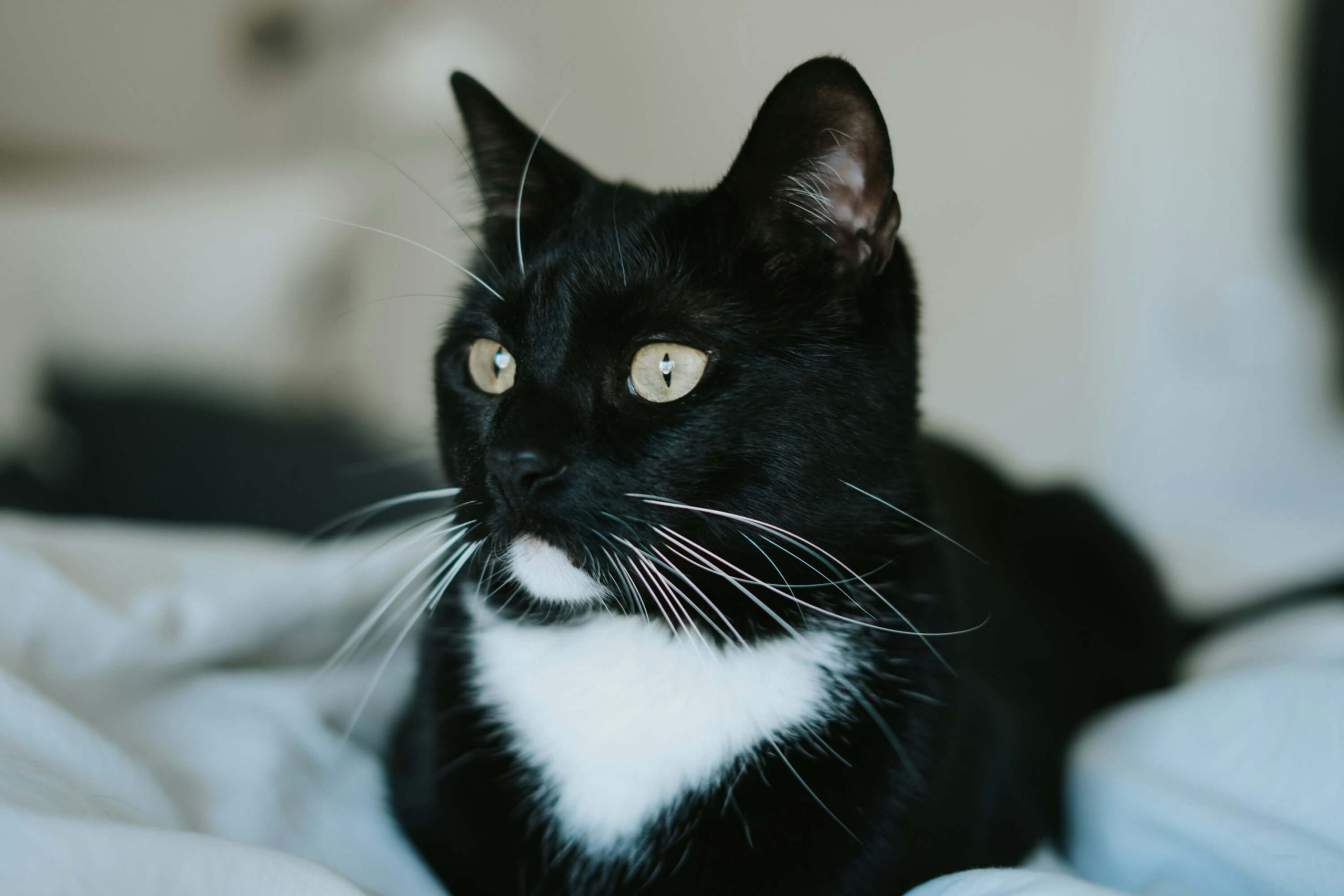
When we adopted Wolff, we prepared ourselves for the typical cat ownership experience with houseguests. We bought a baby gate to block off a “safe room” where he could retreat during gatherings. We printed out instructions for guests: don’t chase the cat, let him approach you, keep voices low, understand that he might hide for hours. We warned friends with allergies to bring medication. We essentially planned our social life around accommodating an antisocial animal who would, we assumed, want nothing to do with the chaos of human gatherings.
That cat never materialized. Instead, we got Wolff—a tuxedo cat who treats every party like he’s the guest of honor, every gathering like his personal networking event, and every new visitor like a potential member of his fan club. The “safe room” became storage space. The instructions went in the recycling. And our friends stopped asking “Can we come over even though you have a cat?” and started asking “Is Wolff going to be there?”
This is the story of how our supposedly solitary feline became the most social creature in our household, and what his behavior taught us about tuxedo cats, their unexpected personality traits, and their remarkable ability to not just tolerate human social gatherings but to absolutely dominate them.
The First Party: Expecting a No-Show
Our first gathering after adopting Wolff was a small dinner party—just six people total, including my partner and me. We’d had Wolff for about two months, and while he was affectionate with us, we had no data on how he’d handle strangers in his territory. Everything we’d read suggested cats prefer consistency and quiet, that parties would stress them out, that the responsible thing was to give them space to hide.
So we set up his safe room with food, water, litter box, and favorite toys. We put a note on the door: “Cat Inside—Please Keep Closed.” We told our guests that Wolff would probably make himself scarce and that was completely normal and fine.
Wolff had other plans.
Our friends arrived, coats were hung, wine was poured, and we’d settled into conversation in the living room when someone asked, “So where’s this famous cat we’ve heard so much about?”
Before I could launch into my prepared explanation about cats and stress and safe spaces, there was Wolff. He didn’t slink out nervously or peek around corners tentatively. He walked into the living room with the confidence of a CEO entering a board meeting, tail held high, moving with that distinctive tuxedo cat swagger that suggests he not only belongs here but quite possibly owns the place.
“Oh my god, he’s wearing a tuxedo!” our friend Sarah exclaimed. “He’s literally dressed for the dinner party!”
It was true. Wolff’s formal black-and-white markings made him look perpetually dressed for an elegant evening. And somehow, he seemed to know it. He positioned himself in the center of the room—not hiding behind furniture or staying near the walls like a nervous cat would, but right in the middle of the action, where everyone could see him.
What happened next would become his signature move, the opening gambit of what we now call “The Wolff Experience.”
The Grand Entrance: A Performance in Three Acts
After dozens of gatherings, we’ve learned to recognize Wolff’s entrance strategy. It’s remarkably consistent, almost scripted, and devastatingly effective at capturing everyone’s attention. It unfolds in three distinct acts, like a perfectly choreographed performance.
Act One: The Dramatic Appearance
Wolff never rushes into a room full of guests. That would be unseemly, desperate for attention. Instead, he times his entrance perfectly—usually ten to fifteen minutes after guests have arrived, right when conversation has started flowing but before food is served. The timing suggests he’s been listening, waiting for the perfect moment to make his move.
He appears in doorways or at the top of stairs, pausing there as if to make sure everyone has the opportunity to notice him. He’s backlit, perfectly positioned, his formal markings displayed to maximum effect. Someone always notices.
“Where’s Wolff?” has become the trigger question. It doesn’t matter who asks it—family, friends, even first-time visitors who’ve heard about him. The moment someone voices that question, Wolff appears. Every single time. We’ve tested this. We’ve waited to see if he’d come out without prompting. He won’t. He waits for his cue, for someone to ask for him specifically, and then he makes his entrance.
My partner jokes that Wolff is actually a theater major trapped in a cat’s body, and honestly, the comparison isn’t far off.
Act Two: The Casual Approach
After his initial appearance, Wolff doesn’t immediately approach anyone. That would seem too eager, too needy. Instead, he moves into the room with studied nonchalance, appearing to be interested in everything except the actual guests. He’ll investigate a corner he’s investigated a thousand times before. He’ll pause to groom a paw. He’ll gaze out the window as if something fascinating is happening outside.
But he’s working the room. Moving slowly, deliberately, creating a path that will bring him into proximity with each guest. And that’s when the tail work begins.
The light tail swipe is Wolff’s greeting card, his way of announcing his presence without seeming to demand attention. He’ll pass by someone’s leg, his tail trailing behind him in what appears to be an accidental brush. Then another guest receives the same treatment. Then another.
The tail swipes are whisper-light, barely noticeable, but they serve their purpose. Each person who receives one immediately becomes aware of Wolff’s presence. They look down, notice him, smile. “Oh, there he is!” they say. And just like that, Wolff has successfully made himself the center of attention without appearing to try.
Act Three: The Full Social Circuit
Once every guest has been tail-swiped and acknowledged, Wolff shifts into high gear. This is where his true social butterfly nature emerges. He begins what we call his “rounds”—systematically visiting each guest, spending time with each person, distributing his attention with remarkable fairness.
He’ll approach someone sitting on the couch and jump up beside them. He’ll headbutt a hand, soliciting pets. He’ll purr loudly enough for everyone to hear. He’ll make eye contact, hold it, and slow-blink—the cat equivalent of “I like you, I trust you, we’re friends now.” After a few minutes of focused attention, he’ll move on to the next guest, ensuring everyone gets their Wolff time.
What’s remarkable is his awareness of the room’s social dynamics. He gravitates toward people who are nervous or shy, as if sensing they need a conversation starter. He avoids guests who are loud or overly enthusiastic until they’ve calmed down. He seems to instinctively understand how to work a room, where to position himself for maximum attention, and how to keep himself at the center of the gathering without being obnoxious about it.
The Food and Drink Routine
Perhaps the most unexpected aspect of Wolff’s party behavior is his participation in the actual refreshments. We learned early on that we couldn’t leave food unattended when Wolff was in social mode. Not because he’d steal food—though he absolutely would—but because he’d integrated eating and drinking into his party routine.
The first time it happened, we were mortified. We’d set out appetizers—cheese, crackers, some vegetables and dip—and stepped into the kitchen to grab drinks. When we returned, Wolff was standing on the coffee table, delicately eating a piece of cheese while our friends watched, amused and slightly stunned.
“Should we… stop him?” someone asked.
Before I could answer, Wolff finished his cheese, licked his whiskers with great dignity, and moved on to investigate the vegetable tray. He sniffed the carrots (unimpressed), sampled a cucumber slice (acceptable), and then hopped down from the table and padded over to someone’s water glass.
We’ve since learned that Wolff doesn’t drink from just any glass. He has standards. He prefers water over other beverages, though he’ll occasionally investigate wine glasses with great interest (we don’t let him drink alcohol, obviously, but he seems fascinated by the smell). He has a technique: he’ll approach a glass, sniff it thoroughly, then delicately dip his paw in and lick the water off. If the glass meets his approval, he might drink directly from it, careful not to knock it over.
Guests are universally charmed by this behavior. “He’s having a drink with us!” they’ll say, laughing. And that’s exactly what it looks like—Wolff participating in the social ritual of eating and drinking, making himself one of the party.
We’ve adapted our entertaining style to accommodate this. We now set out “Wolff-safe” appetizers—plain cooked chicken, a small dish of tuna, some cat-appropriate treats arranged on a small plate. We put out a water bowl that looks like a cocktail glass (we found it at a pet store and bought it specifically for parties). Wolff uses both the designated offerings and helps himself to guest food with equal enthusiasm.
The remarkable thing is how comfortable our guests are with this. Instead of being annoyed or grossed out by a cat joining the appetizer hour, people are delighted. They take photos. They offer him food from their plates. They save him choice bits of chicken or fish. Wolff has somehow convinced an entire network of humans that him eating party food is not only acceptable but actually enhances the gathering.
Reading the Room: Emotional Intelligence in Action
The more gatherings we hosted, the more we noticed Wolff’s remarkable emotional intelligence. He doesn’t treat all guests the same way. He adapts his approach based on individual personalities, comfort levels, and even emotional states.
My sister is nervous around cats after a childhood incident with an aggressive stray. Wolff seems to sense this. He doesn’t approach her directly or jump onto her lap. Instead, he positions himself near her—close enough to be present but far enough to be non-threatening. He moves slowly around her, avoids sudden movements, and gradually, over the course of an evening, wins her over. By the end of her first visit, she was voluntarily petting him. By her third visit, she was sitting on the floor playing with him.
Conversely, we have friends who are enthusiastic cat lovers, the type who make high-pitched noises and lunge for any cat they see. Wolff avoids these guests initially. He’s not afraid of them—he just knows they’re too much, too intense. He waits for them to settle down, to get absorbed in conversation and forget about him. Then he’ll approach on his terms, when they’re calm and less likely to overwhelm him with attention.
He’s particularly attuned to guests who are stressed or going through difficult times. During one dinner party, our friend Jennifer had just gone through a painful breakup. She was putting on a brave face, participating in conversation, but clearly struggling underneath. Wolff went directly to her. He jumped onto the couch beside her, pressed himself against her side, and purred—that deep, resonant purr that’s impossible to ignore. She started petting him absently while talking, and gradually, visibly, her shoulders relaxed. Her smile became more genuine.
“He knows,” she said later, scratching behind his ears. “He knew I needed this.”
And he did. Wolff consistently demonstrates an ability to read human emotions and respond appropriately. He’s attentive to people who are sad or stressed, offering comfort through his presence. He’s playful with people who are happy and energetic. He gives space to people who need it and attention to people who want it.
This isn’t typical cat behavior. Most cats operate based on their own needs and preferences. Wolff somehow factors other beings’ emotional states into his decision-making. It’s a level of social sophistication that continually surprises us.
The Tuxedo Personality: Born for the Spotlight
After watching Wolff charm hundreds of guests over the past three years, we’ve become fascinated by whether his social nature is unique to him or common among tuxedo cats. The research, anecdotal evidence, and conversations with other tuxedo cat owners all point toward the latter.
Tuxedo cats have a reputation—perhaps not scientifically rigorous, but remarkably consistent—for being more social, more confident, and more human-oriented than other cats. They’re the cats who greet visitors at the door, who learn their names and come when called, who seem to genuinely enjoy human company rather than merely tolerate it.
The theory behind this personality clustering involves genetics. The genes that control coat color and pattern in cats are located near genes that influence brain chemistry and behavior. While tuxedo cats aren’t a specific breed (the pattern appears across many breeds), the distinctive black-and-white marking seems to correlate with certain behavioral traits.
Tuxedo cats consistently score high on measures of confidence and curiosity. They’re less skittish than many cats, more willing to explore new situations, more comfortable with change. They’re also more vocal, more likely to “talk” to their humans and engage in back-and-forth communication.
All of these traits make sense in the context of Wolff’s party behavior. His confidence allows him to enter a room full of strangers without fear. His curiosity drives him to investigate new people rather than hide from them. His comfort with change means he treats each new gathering as an interesting opportunity rather than a stressful disruption. And his vocalization—the chirps, trills, and meows he uses with guests—facilitates social bonding.
We’ve connected with other tuxedo cat owners online, and the stories are remarkably similar. One woman’s tuxedo cat, James, positions himself by the front door when guests arrive and “greets” each person individually. Another owner’s cat, Oreo, has learned to play fetch specifically to entertain guests—it’s her party trick. A third cat, Felix, will only come out for gatherings of five or more people; smaller groups apparently aren’t worth his time.
The pattern is clear: tuxedo cats aren’t just tolerating human social gatherings. Many of them actively enjoy being part of the social fabric of the household.
The Regular Attendees: Wolff’s Fan Club
Over time, certain friends have become what we jokingly call “Wolff’s people.” These are guests who specifically ask about him when making plans, who bring him treats when they visit, who spend as much time interacting with him as with us.
Our friend Marcus is the president of Wolff’s unofficial fan club. He arrives at every gathering with a small bag of premium cat treats purchased specifically for Wolff. He’s learned Wolff’s favorite games and will spend twenty minutes throwing a toy mouse while the rest of us chat. When Marcus visits, Wolff glues himself to his side, clearly recognizing someone who has properly prioritized him.
Marcus actually schedules his visits around when we’re hosting larger gatherings. “Wolff is more fun when there’s an audience,” he says, and he’s not wrong. Wolff seems to elevate his performance when multiple people are watching. Marcus has become Wolff’s hype man, pointing out his antics to new guests and narrating his behavior like a wildlife documentarian: “And here we see the tuxedo cat in his natural habitat, working the room with practiced ease…”
Sarah has become Wolff’s photography partner. She’s an amateur photographer, and she’s taken hundreds of photos of Wolff at various gatherings. She’s captured him mid-party trick, lounging among guests, stealing appetizers, “supervising” game night. She’s created an Instagram account just for these photos, and Wolff has developed a modest internet following of people who love seeing a tuxedo cat living his best social life.
Then there’s my mother, who was initially skeptical about our “party cat” stories until she witnessed Wolff in action at a family gathering. Now she insists on scheduling her visits when we’re hosting something, because “Wolff is so entertaining at parties.” She’s become one of his most reliable enablers, sneaking him bits of turkey or salmon and laughing as he makes his rounds.
My brother, who claims not to be a “cat person,” has developed a grudging respect for Wolff’s social skills. “He’s like that guy at networking events who somehow talks to everyone and makes it seem effortless,” he observed during one holiday gathering. “I kind of admire it.” We’ve caught him multiple times having full conversations with Wolff, discussing sports scores and work stress as if Wolff is offering sage advice through purrs and head tilts.
These relationships have added a layer to our friendships we never anticipated. Conversations now include “How’s Wolff?” alongside questions about work, family, and life. Friends send us cat-related memes and tag us in social media posts about tuxedo cats. Wolff has become part of our friend group’s shared culture and inside jokes.
The Downside: Managing a Social Butterfly Cat
While Wolff’s social nature is largely delightful, it does come with challenges. The primary one is that we can’t just “put the cat away” when we need to. He knows when we’re preparing for guests—the house cleaning, the food preparation, the furniture rearranging are all clear signals. And he expects to participate.
We learned this the hard way when we hosted a formal work dinner. We’d decided that Wolff’s antics might be too unprofessional, so we planned to keep him in the bedroom during the meal. We put him in there with treats, toys, and comfort items about an hour before guests arrived.
He yowled. Loudly and persistently. We could hear him from the living room. When our first guest arrived and asked about the noise, we had to explain that our cat was protesting his exclusion from the party. This led to an awkward conversation about whether the cat could join us, and ultimately, we let him out because the yowling was more disruptive than his presence would be.
Wolff emerged with ruffled dignity, shot us a look that clearly communicated his displeasure, and then proceeded to charm our work colleagues with the same techniques he used on our friends. By the end of the evening, my boss was petting Wolff and asking about his breed while my colleague was taking photos to show his cat-loving wife.
The lesson learned: Wolff considers himself part of the household’s social structure, and excluding him causes more problems than including him. We’ve accepted this. When we host gatherings, Wolff is part of the package. We warn guests who have allergies. We cat-proof the food to some extent. And we let him do his thing.
Another challenge is that Wolff has developed expectations about gathering frequency. If we go too long without hosting something, he becomes restless. He’ll position himself by the front door as if waiting for guests. He’ll meow questioningly at us, seemingly asking when the next party is. We’ve actually started hosting more frequent small gatherings partly because Wolff clearly thrives on the social stimulation.
We’ve also had to establish some boundaries. Wolff learned that jumping onto the dining table during meals gets laughs and attention, so he started doing it regularly. We had to break this habit through consistent redirection and providing an acceptable alternative—a chair positioned near the table where he can observe without being on the eating surface. It took weeks, but he eventually accepted the compromise.
Game Night Champion
One unexpected development in Wolff’s social repertoire is his participation in game nights. We host a weekly board game gathering with a rotating group of friends, and Wolff has appointed himself the official game night supervisor.
His involvement began innocuously. During our first game night after adopting him, he jumped onto the table to investigate the Catan board. We gently removed him, but he kept returning, fascinated by the moving pieces and our animated reactions to gameplay. Eventually, we gave up and let him stay, assuming he’d get bored and leave.
He didn’t leave. He watched. And then he started… participating.
During a particularly tense game of Ticket to Ride, Wolff reached out a paw and deliberately moved one of the train pieces. The table erupted in laughter and debate about whether his move was legal. We decided it wasn’t, but Wolff had discovered that interacting with game pieces got reactions.
Now, game night includes planning for Wolff’s “moves.” We’ve established rules: if Wolff moves a piece, that player can move it back without penalty. If Wolff lies down on part of the board, that section becomes temporarily inaccessible and players must work around him. If Wolff steals a game piece entirely (which he’s done with Monopoly houses, Scrabble tiles, and numerous cards), that piece is considered lost to “cat tax” and removed from play.
Our friends have embraced this chaos. Some bring cat toys specifically to distract Wolff during crucial game moments. Others encourage his interference, especially when it disrupts an opponent’s strategy. One friend jokes that Wolff has never lost a game night, since technically he influences every game’s outcome.
The reality is that Wolff makes game night more fun. His unpredictable interventions create memorable moments and inside jokes. The competitive tension breaks when Wolff does something ridiculous. And there’s something fundamentally entertaining about a tuxedo cat in a bow tie (yes, we got him a tiny bow tie for formal game nights) supervising human recreation with the serious air of a referee.
What Wolff Taught Us About Cat Sociability
Living with Wolff has fundamentally changed how we understand cats and their social capabilities. The stereotype of the aloof, antisocial cat who merely tolerates humans exists for a reason—many cats fit that description. But Wolff has shown us that cats are capable of much more complex social behavior than we typically credit them with.
Wolff doesn’t just tolerate parties; he actively participates in them. He reads social cues, adapts his behavior to different personalities, engages in social rituals like communal eating and drinking, and derives clear pleasure from being part of the group. This suggests that at least some cats have social needs and social intelligence that rival dogs—they just express it differently.
We’ve also learned that socialization in cats is complex. Wolff was already friendly when we adopted him, but his party skills have developed and refined over time. He’s learned what behaviors get positive responses from guests. He’s figured out timing and pacing. He’s developed signature moves. This is learned behavior, not just instinct, which means he’s observing, remembering, and adapting based on experience.
This realization has made us reconsider how we think about enrichment for indoor cats. We usually focus on physical enrichment—toys, climbing structures, windows for viewing outside. But Wolff has taught us that social enrichment matters too. For highly social cats, regular interaction with different people might be as important as physical play.
We’ve started recommending to friends with social cats that they consider hosting more gatherings or at least having visitors more regularly. Cats like Wolff don’t just benefit from interaction with their primary humans—they thrive on variety, on meeting new people, on being part of dynamic social situations.
The Grand Entrance Evolution
Three years in, Wolff’s party routine has become legendary among our friends. New guests are told about it in advance: “Wait until you see Wolff make his entrance.” Regular attendees have started making it a game, deliberately asking “Where’s Wolff?” to trigger his appearance, then watching new guests’ reactions as he performs his routine.
Wolff, for his part, seems to understand that he has an audience and that performances are expected. His entrances have become more dramatic over time. He’s added new flourishes—sometimes he’ll do a full stretch before entering the room, arching his back and extending his legs in a move that gets “awww”s from everyone. Sometimes he’ll pause in the doorway, turn his head to look over his shoulder at his audience, then continue his entrance as if he’s too sophisticated to acknowledge their attention directly.
He’s also developed what we call his “closing number.” As parties wind down and guests start leaving, Wolff will position himself by the door and brush against legs as people exit, offering a goodbye tail swipe to each departing guest. Several friends have commented that they feel like they haven’t properly attended one of our parties if they don’t get a goodbye from Wolff.
The consistency of his routine is remarkable. Whether we’re hosting eight people or twenty, whether it’s a casual Friday night hangout or a formal dinner party, Wolff follows the same basic script: wait for someone to ask about him, make his grand entrance, perform his tail-swipe rounds, settle in for attention and appetizers, supervise activities, and bid farewell to departing guests.
Yet within this structure, there’s improvisation. He adapts to each gathering’s unique energy, pace, and attendees. He’s more playful at casual gatherings, more dignified at formal ones. He’s more interactive with small groups, more selective about his attention with large crowds. He’s mastered the art of being present without being overwhelming, social without being needy.
The Unexpected Joy of a Social Cat
When we adopted Wolff, we expected a pet—a furry companion who would provide affection and entertainment within the private sphere of our home. We never imagined we’d gain a co-host, a conversation starter, an ice-breaker, and a legitimate draw for our social gatherings.
But that’s exactly what Wolff has become. Our parties are better because he’s part of them. Shy guests have an easy conversation topic and a comfortable way to ease into the social atmosphere. The energy in the room lifts when he makes his entrance. People laugh more, relax more, enjoy themselves more because there’s a charming tuxedo cat working the room alongside us.
Friends have told us that they look forward to our gatherings more than others partly because of Wolff. There’s an element of unpredictability—what will he do this time? Will he steal food? Interfere with games? Claim someone’s lap as his throne for the evening? This unpredictability adds entertainment value without chaos, since Wolff’s mischief is always relatively harmless and usually charming.
Wolff has also changed the tone of our gatherings. Parties can sometimes feel performative or stressful—the pressure to be a good host, to keep conversation flowing, to ensure everyone’s having fun. Wolff’s presence provides a release valve for that tension. When conversation lags, Wolff does something entertaining. When someone feels awkward, petting Wolff gives them something to do. When energy drops, Wolff’s antics revive it.
We’ve received feedback from friends that our home feels welcoming partly because of how Wolff greets and interacts with guests. One friend said, “When Wolff makes his rounds and spends time with me, I feel like I’m really welcome here, not just tolerated. If the cat accepts me, I know I belong.” That comment struck us—Wolff has become an ambassador for our household, communicating welcome and acceptance in ways that complement our own hosting efforts.
The Social Media Star
Sarah’s Instagram account for Wolff—@WolffTheSocialCat—has grown beyond what any of us expected. What started as a personal collection of party photos has evolved into a minor internet phenomenon. The account has thousands of followers who tune in regularly to see Wolff’s latest social adventures.
The comments are revealing. People write things like “I wish my cat was like this” and “This cat has a better social life than I do” and “Tuxedo cats really are special.” Many commenters share stories of their own social cats, creating a community of people who recognize that cats can be far more social than the stereotype suggests.
The account has also attracted attention from cat behaviorists and veterinarians, some of whom have reached out to discuss Wolff’s behavior. We’ve learned from these conversations that truly social cats like Wolff are relatively rare but not unheard of, and that his behavior demonstrates advanced social cognition and emotional intelligence. One behaviorist suggested that Wolff might be an example of what domestic cats could become with selective breeding for social traits—though we’re not sure we support that idea, since Wolff’s personality emerged naturally and forcefully without any human engineering beyond standard domestication.
The account has also led to unexpected real-world connections. We’ve met local followers at cat cafes and pet events. We’ve connected with other tuxedo cat owners whose cats display similar social butterfly tendencies. We’ve even been invited to bring Wolff to a local animal shelter’s fundraising event, though we declined (Wolff is social, but that seemed overwhelming even for him).
Looking Forward
Three years into living with our social butterfly cat, we can’t imagine hosting gatherings without him. He’s become as much a part of our entertaining identity as our cooking, our home decor, or our music playlists. “Are you going to [our names]’ place? Wolff will be there!” is apparently how our friends describe our gatherings to their friends.
We’ve adapted our hosting style to support Wolff’s participation. We time gatherings to his rhythm—not too early in the morning when he’s sleepy, not so late at night that he’s already settled in for sleep. We plan menus with Wolff-safe options. We arrange furniture to give him pathways for his rounds and comfortable spots for observation. We brief first-time guests on what to expect.
Wolff continues to refine his social skills. He’s recently started “helping” us greet guests at the door, appearing in the entryway when the doorbell rings and sitting prettily while we take coats and welcome people in. He’s developed different tail-swipe styles for different people—gentle and questioning for cat-nervous guests, more assertive and familiar for his regular fans. He’s learned that sitting on the ottoman in the center of the room gives him maximum visibility and accessibility during large gatherings.
We wonder sometimes where his limits are. Would he handle an even larger party? Would he participate in different types of gatherings—book clubs, crafting circles, dinner parties with different cuisines? Would his social nature extend to outdoor events if we found a way to safely include him? We haven’t pushed boundaries, content to let Wolff define his own comfort zone, but his consistent enthusiasm suggests we might be underestimating his social ambitions.
The Lesson of Wolff
If there’s a larger lesson in Wolff’s story, it’s this: animals are capable of surprising us, of exceeding our expectations and challenging our assumptions. We adopted Wolff expecting a typical cat—affectionate with family, tolerant of occasional visitors, primarily concerned with food, sleep, and the occasional toy. We got something far more complex: a genuinely social creature who derives pleasure from crowds, who’s developed sophisticated strategies for navigating human social situations, who’s chosen to make himself an integral part of our household’s public life.
Tuxedo cats, with their confidence and intelligence, seem particularly prone to these unexpected personality expressions. But Wolff has taught us to approach all animals with openness to possibilities. What else might cats be capable of that we haven’t noticed because we’re not looking for it? What other behaviors might emerge if we create environments that support them?
Wolff has also taught us about the importance of respecting animal agency. We could have insisted on keeping him separate from guests, forcing him into the role of the invisible pet who exists only in private moments. Instead, we recognized his desire to participate and adapted our expectations to support that choice. The result has enriched our lives, our friendships, and—we believe—Wolff’s life as well.
Every time someone asks “Where’s Wolff?” and he makes his grand entrance, tail high and confidence radiating from every whisker, we’re reminded that we don’t just own a cat. We share our home with a sophisticated, social creature who’s chosen to be part of our human world in ways that transcend the typical pet-owner relationship. He’s not just tolerating our gatherings. He’s not just allowing us to host in his territory. He’s actively participating, contributing, enhancing our social life through his presence and personality.
And honestly? Our parties wouldn’t be the same without him. The social butterfly we never expected has become the guest everyone hopes to see, the co-host we didn’t know we needed, and a constant reminder that tuxedo cats—with their formal appearance and informal attitude—are capable of remarkable things when given the opportunity to show us who they really are.