
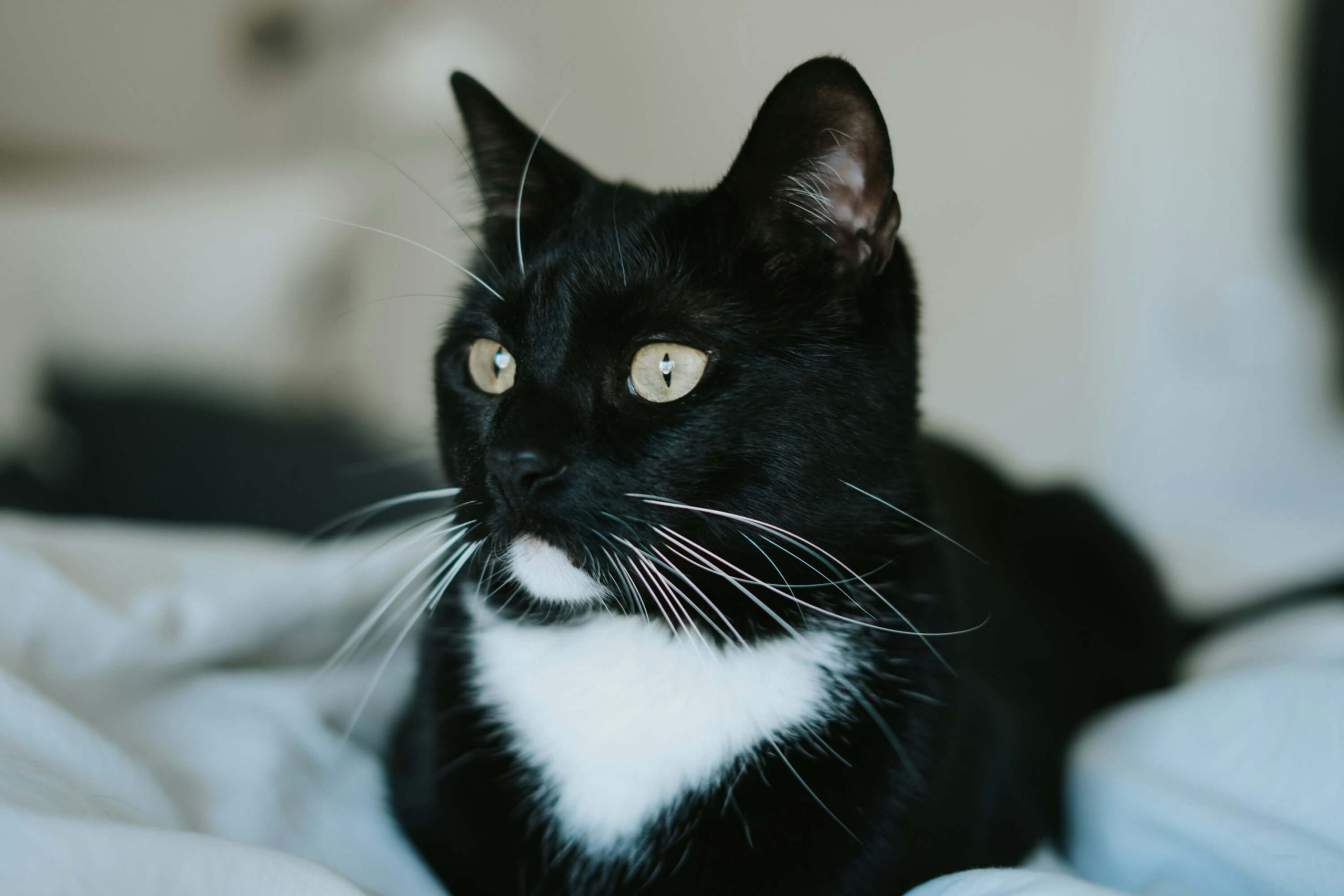
The first time I heard “Babe, come get Wolff, I’m in a meeting!” echoing from my partner’s home office, I thought we had a problem. Our tuxedo cat was being disruptive again, demanding attention at the worst possible time, interrupting another virtual meeting with his insistent meows, paw taps on her arm and aggressive tail swipes.
I grabbed his pet backpack carrier with a sigh, thinking I was giving Wolff a time-out. A consequence. A way to redirect his needy behavior while Lish finished her meeting in peace.
That was two years ago. Now? That same yell from the office is music to both our ears. Because what I thought was punishment turned out to be Wolff’s absolute favorite part of the day. And the day I realized this completely transformed how I understood my tuxedo cat—and how we spend our days together.
Let me tell you about the moment everything clicked, and why your tuxedo cat might be the perfect shopping companion you never knew you needed.
The Meeting Interrupt: A Daily Reality for Tuxedo Cat Parents
If you live with a tuxedo cat, you already know what I’m talking about. That famous “tuxitude”—the confident, dog-like personality that makes them so entertaining—also makes them incredibly, wonderfully, exhaustingly needy for attention.
Wolff, with two F’s (more on why that matters in a minute), is perhaps the neediest cat I’ve ever encountered. And I don’t say that with any judgment. It’s one of the things I love most about him. But when Lish transitioned to working from home full-time, Wolff’s need for constant interaction became… problematic.
The Morning Pattern That Became Our Routine
Every morning around 10 AM, like clockwork, Wolff would appear in Lish’s office doorway. He’d start with a polite meow. Then another. Then he’d walk across her desk—right in front of the camera during her video meetings. He’d tap her keyboard. Sit on her papers. Knock her pen off the desk. And if all else failed, he’d simply stare at her with those intense green eyes until she acknowledged him.
“Babe, come get Wolff, I’m in a meeting!”
That was my cue. After 30+ years in public service, I’m retired now, so I’m the designated cat wrangler. I’d walk to her office, scoop up Wolff—who’d be purring despite his “banishment”—and carry him out so Robin could finish her meeting.
At first, I’d just take him to another room. But Wolff would be back at her door within five minutes, meowing to get in. We tried closing the door. He’d scratch at it and yell. We tried distracting him with toys. He’d play for exactly two minutes and then return to lobbying for Robin’s attention.
The Day Everything Changed
About three months into this daily struggle, I had a morning full of errands—grocery store, post office, hardware store. When Robin’s inevitable “come get Wolff” call came, I looked at my tuxedo boy and had a thought: What if he came with me?
I pulled out the pet backpack carrier we’d bought months earlier but rarely used. Wolff had ridden in it to a few vet appointments without complaint, but I’d never considered it for everyday activities.
I opened the carrier. Wolff walked right in, turned around, and settled into position like he’d been waiting for this invitation his entire life.
That first trip to the grocery store changed everything.
The Discovery: When “Time-Out” Became His Happy Place
I’ll never forget walking into our local market that first morning with Wolff perched in his backpack carrier, his tuxedo face visible through the bubble window, looking at everything with intense curiosity.
The reactions were immediate.
“Oh my gosh, is that a cat?” “Look at him! He’s wearing a tuxedo!” “Can I take a picture?” “What’s his name?”
“Wolff. With two F’s,” I’d answer, smiling as Wolff soaked up the attention like he was born for it.
What I Noticed About Wolff That Day
As we moved through the store, I watched Wolff carefully, ready to abort the mission if he showed any signs of stress. But there were no signs of stress. Instead, I saw:
Alert engagement: His ears were forward, eyes bright, head turning to watch everything. This wasn’t fear—this was fascination.
Relaxed body language: No tension, no attempts to escape, no distress vocalizations. He was comfortable.
Active interest in people: When someone approached to admire him, Wolff would lean toward them slightly, clearly enjoying the attention.
Contentment signals: Between interactions, he’d settle back in the carrier with half-closed eyes, purring. I could feel the vibration through the backpack.
By the time we finished shopping and headed home, I had an epiphany: Wolff wasn’t tolerating this experience. He was loving it.
The Reunion That Confirmed Everything
When we got home, I expected Wolff to bolt from the carrier and hide under the bed, recovering from his “ordeal.” Instead, he took his time climbing out, stretched leisurely, ate some treats, and then curled up for a completely relaxed nap.
And here’s the kicker: he didn’t interrupt Robin’s afternoon meeting. Not once. He was content, satisfied, and tired in the best possible way.
That’s when I realized what had actually happened. What I thought was a time-out—a consequence for disruptive behavior—was actually complete enrichment. Wolff wasn’t being punished by going on errands. He was being rewarded.
Understanding What Makes Tuxedo Cats Perfect Errand Companions
After that first successful trip, I started researching why Wolff seemed so uniquely suited for this lifestyle. What I learned helped me understand tuxedo cats—and my Wolff specifically—on a much deeper level.
The Tuxedo Cat Personality and Environmental Enrichment
Tuxedo cats are known for several distinctive traits:
- High intelligence: They’re problem-solvers and observers
- Dog-like loyalty: They bond strongly with their people and want to be involved
- Confident personalities: That famous tuxitude means they’re often braver than average cats
- Social nature: They tend to enjoy interaction more than solitary activities
- High energy and curiosity: They need mental and physical stimulation
When you look at that list, it makes perfect sense that a tuxedo cat would enjoy errands. It’s not punishment—it’s everything they naturally crave: novelty, stimulation, social interaction, and time with their favorite person.
What the Market Provides That Home Cannot
As I continued taking Wolff on daily errands, I realized he was getting something from these trips that even the most enriched home environment couldn’t fully provide:
Constant novelty: Every trip offers new sights, sounds, and smells. The grocery store has different people every time. The hardware store has interesting textures and sounds. Even familiar locations provide new experiences.
Social interaction: Wolff meets dozens of people during our errands. Each person provides attention, validation, and novel interaction. For a social, attention-seeking tuxedo cat, this is paradise.
Safe adventure: The backpack carrier provides security—Wolff’s own portable territory—while allowing him to experience the outside world. It’s adventure with a safety net.
Purpose and routine: Wolff has a job now. His job is to accompany me on errands. Having purpose and routine satisfies something deep in a tuxedo cat’s psyche.
Bonding time: These trips became our special time together, strengthening our relationship in ways that staying home never could.
How It Works: The Practical Reality of a Market-Going Tuxedo Cat
Let me get practical for a moment, because I know what you’re thinking: “This sounds great, but would it actually work with my tuxedo cat?”
Maybe. Maybe not. But here’s what I’ve learned about making it work with Wolff.
The Backpack That Changed Everything
The pet backpack carrier is essential. Not a traditional carrier—those are for transport only. A backpack specifically designed for adventure cats, with:
A bubble window: So Wolff can see out in all directions Ventilation panels: Keeps him comfortable Comfortable padding: He’s in there for 30-60 minutes sometimes Security features: Clips to prevent escape Weight distribution: Comfortable for me to wear
Wolff walks right into his carrier now. I don’t even have to ask. I just open it, and he climbs in, turns around, and waits for me to zip it up. That eager participation tells me everything I need to know about how he feels about our outings.
Where We Go and What We Do
Our typical errands include:
- Grocery shopping: The market is Wolff’s favorite. So many people, so much activity
- Post office: Quick trips, but Wolff enjoys the attention from postal workers
- Hardware store: Interesting sounds and smells, helpful staff who always greet him
- Bank drive-through: The tellers keep treats for Wolff now
- Coffee shop patio: Outdoor seating where Wolff can enjoy fresh air
- Walking around downtown: Window shopping becomes cat watching
The Introduction That Became His Signature
Early on, I realized people always asked the same questions: “What kind of cat?” and “What’s his name?”
I started introducing him consistently: “This is Wolff, with two F’s.”
Why two F’s? Because Robin and I wanted him to have a name with character, with substance, with a story. The double F makes people pause, remember him, smile. It’s distinctive—just like Wolff himself.
Now, regular shopkeepers know him. “There’s Wolff with two F’s!” they’ll call out when we enter. He has fans. Actual fans who ask where he’s been if I shop without him.
What I Watch For: Signs He’s Happy vs. Stressed
I’m not cavalier about this. I constantly monitor Wolff’s comfort and wellbeing during our trips. Here’s what I look for:
Happy signs (what I see regularly):
- Relaxed whiskers and ears
- Interested, alert expression
- Purring when we’re in familiar places
- Leaning toward people who approach
- Settling comfortably between interactions
- Good appetite and normal behavior when home
Stress signs (what would make me end the trip):
- Flattened ears or dilated pupils
- Attempting to escape or hide
- Excessive vocalization (different from his chatty hellos)
- Panting or drooling
- Aggression or extreme fear responses
In two years of regular errands, I’ve never seen stress signs from Wolff. Not once. This activity genuinely suits his personality.
The Social Impact: How Wolff Brightened Our Community
Something unexpected happened as Wolff became a regular fixture on our daily errands. He didn’t just enrich his own life—he started enriching the lives of everyone he encountered.
The Grocery Store Regular Who Waits for Us
There’s an elderly woman named Margaret who shops at the same time we do most mornings. The first time she met Wolff, she lit up like a child on Christmas morning. Turns out, she’d had a tuxedo cat for eighteen years who’d passed away six months earlier.
Now she plans her shopping trips to coincide with ours. She tells Wolff stories about her Bootsie. She brings him treats (which I politely accept and save for home—can’t have him eating random treats). Those five minutes she spends with Wolff each week clearly bring her joy that extends far beyond the moment.
The Teenager Who Started Smiling
There’s a young employee at our hardware store who always looked miserable at work. Understandably—retail isn’t easy. But the first time he saw Wolff, his entire demeanor changed. His face broke into a genuine smile. He asked to take a picture.
Now, every time we visit, he finds us in the store. “Wolff with two F’s!” he’ll announce. “My favorite customer!” He’s told me that seeing Wolff is the best part of his workday. That knowing we might stop by gives him something to look forward to.
The Community Connection I Didn’t Expect
Through Wolff, I’ve met more neighbors in two years than I met in my first five years living here. The cat in the backpack is a conversation starter, a connection point, a shared moment of joy in people’s otherwise routine days.
After decades in public service, I thought I’d left behind my days of actively contributing to my community. Turns out, Wolff and I found a new way to serve—just by showing up and spreading a little joy during ordinary errands.
The Social Media Phenomenon
I’m not big on social media, but Robin convinced me to let her create an Instagram account for Wolff’s adventures: @WolffWithTwoFs. The response has been overwhelming. Thousands of people follow along with his daily errands, commenting about how his adventures brighten their days.
People share photos they’ve taken with Wolff. They send messages about how his account inspired them to try adventure training with their own cats. Some tell us that seeing Wolff’s posts is their daily pick-me-up during difficult times.
It’s humbling, really. This cat who used to interrupt meetings has become a small source of joy for people all over the world.
The Transformation: How Daily Errands Changed Both Our Lives
Looking back on these two years of market trips and daily adventures, I’m struck by how much has changed—not just for Wolff, but for me.
For Wolff: From Disruptive to Fulfilled
The meeting interruptions are rare now. Not because we trained Wolff to stop—because he’s genuinely content. Our morning errands provide:
Physical exercise: Riding in the backpack, staying alert and engaged Mental stimulation: Processing new environments, people, and experiences
Social fulfillment: Satisfying his deep need for interaction and attention Routine and purpose: He has a job, a schedule, a role
When we return home, Wolff is that perfect combination of happily tired and contentedly stimulated. He eats, grooms, and naps. He plays with his toys. He cuddles with Robin in the evening without desperately demanding constant attention, because he’s already had his attention needs met.
He’s become a more balanced, happier cat. Not through restriction or training, but through finding the right outlet for his natural tuxedo cat personality.
For Me: From Retired to Purposeful
I spent 30+ years in public service, and retirement was wonderful—but also an adjustment. Suddenly having free time was both liberating and disorienting. What was my purpose now? How would I structure my days?
Wolff gave me that structure. Our daily errands aren’t just cat enrichment—they’re my daily routine, my reason to get out, my way of staying connected to my community. What started as “dealing with the needy cat” became the highlight of my day.
I’ve also discovered something unexpected: I’m a better observer now. Years in public service taught me to notice people’s needs and respond appropriately. But daily life with Wolff, watching his reactions and reading his communication, has sharpened those skills even further.
I notice more. I’m more present. I appreciate small moments—the way Wolff’s ears perk up when he hears a child’s laughter, the peaceful contentment in his half-closed eyes as we walk home, the gentle purr that tells me he’s exactly where he wants to be.
For Robin: From Frustrated to Freed
Robin’s work-from-home experience transformed too. Instead of constant interruptions and the stress of trying to balance meetings with cat management, she now has peaceful mornings. When 10 AM rolls around and Wolff would previously be scratching at her office door, he’s instead patiently waiting by the front door for me to get his backpack ready.
She jokes that she finally understands why people have office pets—except our office pet goes to someone else’s office (the market) during business hours.
More importantly, Robin gets quality time with Wolff during evenings and weekends without the desperation of an under-stimulated, attention-starved cat. Their relationship has deepened because his needs are being met, so their interactions are more enjoyable for both of them.
Could Your Tuxedo Cat Be an Errand Cat?
After sharing Wolff’s story countless times at the grocery store, I’ve had many tuxedo cat parents ask me: “Could my cat do this?”
Maybe. Here’s what I’ve learned about which cats might enjoy this lifestyle and how to find out.
Tuxedo Cat Traits That Predict Success
Not every cat will enjoy errands, but certain traits suggest a cat might thrive on adventures:
Confidence: Does your tuxedo cat investigate new things rather than hide from them? Social nature: Does your cat enjoy meeting new people rather than running from visitors? Curiosity: Is your cat interested in what’s happening outside windows? Adaptability: Does your cat recover quickly from changes or new experiences? People-orientation: Does your cat constantly seek human attention and interaction?
Wolff checks every single box. That’s why this lifestyle suits him so perfectly.
How to Start: The Gradual Introduction
If you think your tuxedo cat might enjoy errands, here’s how I’d suggest starting:
Step 1: Backpack Introduction at Home (1-2 weeks) Leave the carrier open in common areas. Let your cat investigate freely. Put treats inside. Make it a safe, positive space with no pressure.
Step 2: Short Wearing Sessions Indoors (1-2 weeks) Put your cat in the backpack, zip it up, and just sit on the couch. Let them experience being in the carrier while stationary. Five minutes at first, gradually increasing.
Step 3: Walking Around the House (1 week) Wear the backpack and walk around your home. Let your cat experience the movement and height from a familiar, safe environment.
Step 4: The Front Yard Test (Several sessions) Step outside into your yard or porch. This tests how your cat handles outdoor stimuli—sounds, smells, sights—while still very close to home.
Step 5: Short Car Rides (Several sessions) Drive around the block and back. Then to a nearby quiet parking lot. Gradually increase distance and duration.
Step 6: Quick, Quiet First Outing Choose a quiet store at an off-peak time. Five minutes maximum. Watch your cat’s reactions carefully.
Step 7: Gradually Increase Duration and Complexity If your cat shows positive signs, slowly increase the length and variety of outings.
When to Stop: Reading the Signs
If at any point your cat shows persistent stress signs—fear, aggression, hiding, elimination problems, appetite changes, or obvious distress—this lifestyle isn’t for them. And that’s completely okay. Not every cat is meant to be an adventure cat, and that doesn’t make them less wonderful.
The Daily Rhythm: What Our Life Looks Like Now
Two years in, our routine is comfortable, predictable, and genuinely joyful for both of us.
Morning: The Setup
Around 9:30 AM, I start gathering my shopping list and keys. Wolff notices and positions himself near the front door. By the time I pull out his backpack carrier, he’s already meowing with anticipation.
I open the carrier. He walks in, turns around, settles. I zip it up, put on the backpack, grab my reusable shopping bags, and we’re off.
During: The Experience
At the market, Wolff is alert and engaged. People constantly stop us. Some just smile and point. Others ask questions. Many ask to take photos. I’ve learned to build extra time into errands because these interactions are part of the experience—for me, for them, and for Wolff.
“This is Wolff, with two F’s,” I say probably twenty times per trip. And every time, I feel proud. Proud of this remarkable cat who brings joy to strangers, proud of the bond we’ve built, proud of what we’ve created together.
After: The Contentment
Home again, Wolff climbs out of his carrier with casual confidence. He eats his lunch, drinks water, uses his litter box, and then finds a sunny spot for a well-earned nap. He’s fulfilled, content, and peaceful until Robin finishes her workday.
Evenings are family time—all three of us together, Wolff distributing his affection between us, playing with his toys, being the wonderful, slightly needy tuxedo cat we both adore.
What This Journey Taught Me About Tuxedo Cats
The day I realized Wolff’s “time-out” was actually his favorite part of the day taught me something profound about tuxedo cats—and about really seeing and understanding our animal companions.
They’re Not Problems to Solve, They’re Needs to Meet
Wolff’s meeting interruptions weren’t bad behavior. They were communication. He was telling us, in the only way he could, that he needed more engagement, more stimulation, more adventure than our home could provide.
When I reframed his neediness as legitimate needs rather than problematic demands, everything shifted. Instead of trying to make him less needy, I found a way to meet those needs. The result? A happier cat, a more peaceful household, and an unexpected adventure for both of us.
Tuxitude Is a Feature, Not a Bug
That confident, bold, social tuxedo cat personality that can seem so demanding? It’s what makes Wolff perfect for this lifestyle. His tuxitude isn’t something to tone down—it’s something to channel appropriately.
Your tuxedo cat’s strong personality, their need for attention, their confident social nature—these might not be problems at all. They might be indicators that your cat is capable of and would enjoy more than a typical indoor cat lifestyle.
The Best Solutions Often Come from Observation and Flexibility
I stumbled into this solution by accident, but it worked because I paid attention to Wolff’s responses. I didn’t force him to be an errand cat—I noticed he was thriving as one and leaned into it.
That’s the real lesson: watch your cat. Listen to what they’re telling you. Be willing to try unconventional solutions. The right answer might be something you never considered.
The Gift of Going to Market Together
What started as a desperate attempt to manage meeting interruptions became one of the most meaningful aspects of my retirement. These daily trips with Wolff aren’t just errands anymore—they’re our time together, our shared adventure, our way of moving through the world as a team.
Every time someone lights up at seeing Wolff in his backpack, every time a stranger’s hard day gets a little brighter because they met a cat at the grocery store, every time Wolff purrs contentedly as we walk home—these moments remind me why I’m grateful I said yes to this unusual lifestyle.
If you have a needy, social, confident tuxedo cat who seems to need more than home life provides, I encourage you to consider: maybe they’re not being difficult. Maybe they’re just waiting for you to invite them along on your next adventure.
Is your tuxedo cat needy and social? Have you considered taking them on errands? I’d love to hear about your experiences—or your questions about starting this lifestyle—in the comments below.