
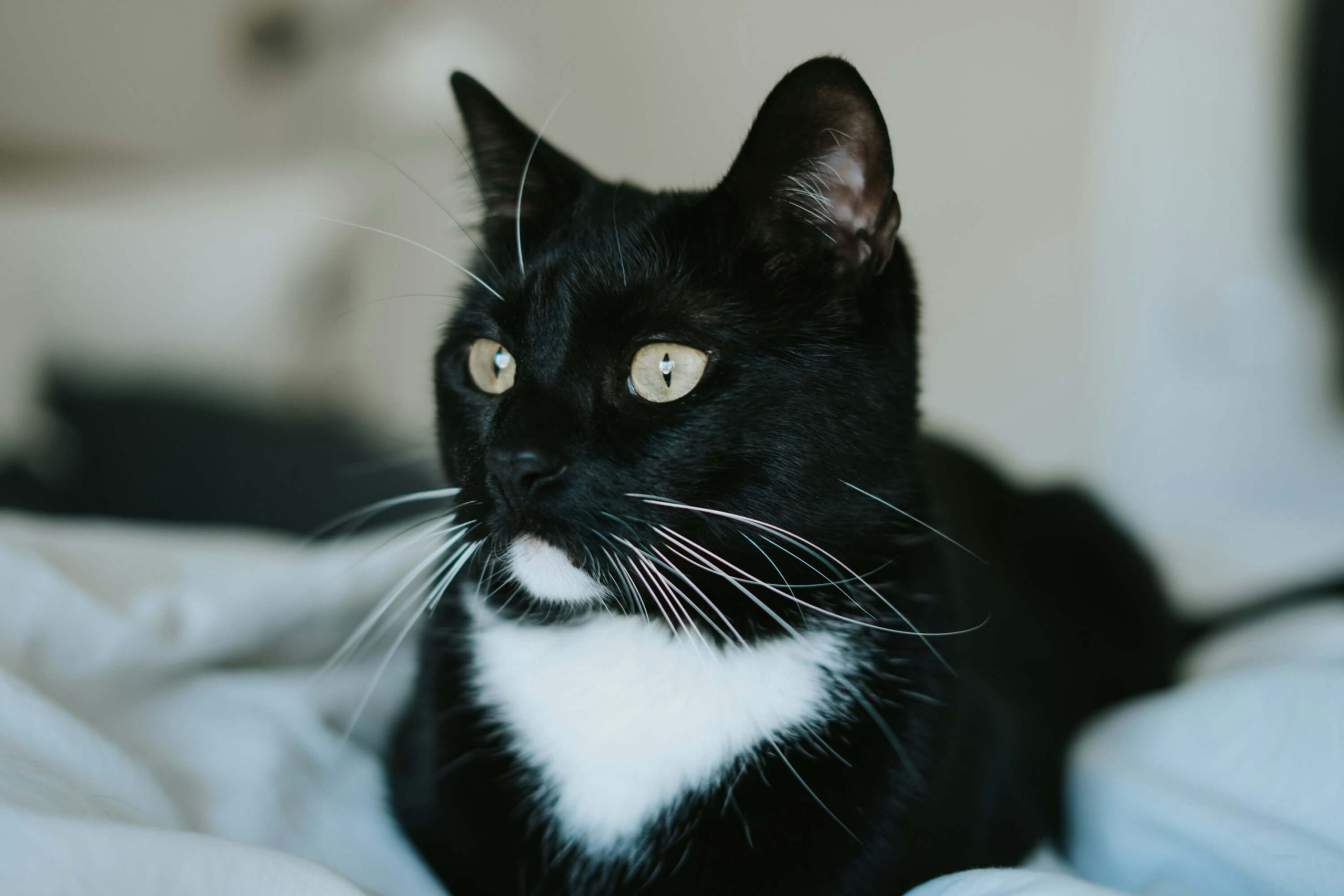

I’ll never forget the morning I realized I’d been having conversations with my tuxedo cat Wolff for years without actually listening to what he was saying.
It was 6:47 AM, just after retirement when I was finally sleeping past my old 5:30 alarm. Wolff stood at my bedroom door making a sound I’d heard hundreds of times—a short, sharp meow followed by a longer, more insistent one. For years, I’d responded the same way: “Yes, Wolff, breakfast is coming.”
But that morning, something made me actually pay attention. The pitch was different. The rhythm was off. When I followed him instead of heading to the kitchen, he led me straight to the bathroom—where I’d accidentally left the faucet dripping all night, and his water bowl was bone dry.
He hadn’t been saying “I’m hungry.” He’d been saying “I’m thirsty, and something’s wrong with my water.”
That moment changed everything. Wolff had been speaking a complex language all along, and I’d been responding with the conversational equivalent of “uh-huh, sure, whatever you say.”
When I Realized I Wasn’t Really Listening
For five years, I thought I understood Wolff’s vocalizations just fine. Meow meant he wanted something. Loud meow meant urgency. Multiple meows meant annoyance at my slow response.
Simple, right? Except it wasn’t simple at all.
Looking back, I can see exactly why I missed so much. I was busy, distracted, operating on autopilot. I’d made assumptions early on about what Wolff’s meows meant and never questioned them. My public service career had taught me the importance of active listening with people, but somehow I’d never applied those same skills to my relationship with Wolff.
Over the following five months, I started paying closer attention to his various meows, and what I discovered shocked me. This is what I learned about tuxedo cat communication.
Revelation #1: Understanding Urgency Levels
About a week after the water bowl incident, Wolff walked into the living room and made a medium-pitched meow. Just one. Then he sat down and looked at me.
In the past, I would have immediately jumped up. But I paused and observed. His body language was relaxed. His tail was up but not twitching. He wasn’t pacing or agitated.
I went back to my book for a moment, watching him. He didn’t escalate—just sat there, occasionally glancing at me, completely calm. Ten minutes later, I checked his food bowl. It was half full, meaning “could use a top-off but not urgent.”
Compare that to two days earlier: sharp meows repeated every 30 seconds, with Wolff pacing and his tail lashing. That time, his litter box was dirty and he was clearly uncomfortable.
I’ve identified three distinct urgency levels:
Low Priority: Single meow, medium pitch, relaxed body language, no immediate follow-up. Examples: food bowl could be fresher, wants attention later.
Medium Priority: Multiple meows, slightly higher pitch, more insistent tone, repeated every few minutes. Examples: water bowl getting low, wants to play, litter box needs scooping soon.
High Priority: Loud, sharp meows repeated frequently, high-pitched and almost frantic, escalating volume, agitated body language. Examples: completely out of water, litter box emergency, something scary happening.
The revelation wasn’t just that these levels existed—it was that I’d been treating everything as high priority, stressing both of us out with unnecessary urgency.
Once I understood this, our whole dynamic shifted. I stopped jumping up every time Wolff made a sound, which actually reduced his vocalizations overall. For low-priority requests, I’d acknowledge him verbally—”I hear you, buddy, give me a few minutes”—and then follow through. That verbal acknowledgment seemed to satisfy him.
Revelation #2: Greeting Meows Are Emotional Communications
About two months in, I’d been out for a few hours and came home to Wolff’s usual greeting meows. But instead of moving past him, I stopped and really listened.
His first meow was bright and chirpy—almost trilling. The second was longer with a slight downward inflection. The third was softer, conversational.
I responded to each one: “Hi, Wolff! Did you miss me? I missed you too. How was your afternoon?”
And he kept “talking”—not random sounds, but what felt like actual back-and-forth conversation. When I paused, he’d vocalize. When he paused, I’d respond. This went on for two minutes.
I’ve identified different greeting types:
“I’m So Happy You’re Home”: Chirpy, trilling sounds in quick succession, accompanied by rubbing against legs, excited body language. Happens after several hours away.
“Where Were You?”: Slightly more insistent meows with questioning inflection, follows me around while vocalizing. Happens when I’ve been gone longer than usual.
“Everything’s Fine Here”: Casual single meow or trill, relaxed body language, brief acknowledgment. Happens after short absences.
“Something Happened While You Were Gone”: Urgent meowing immediately upon return, leads me somewhere specific, won’t settle until I’ve addressed the issue.
I tested this theory deliberately over several weeks. On days when I engaged fully with his greeting—kneeling down, responding verbally, having our “conversation”—Wolff was calmer and more content all evening. On days when I rushed through it, he was more vocal throughout the evening, seemingly trying to get that connection he’d missed.
Understanding greeting meows transformed how I think about Wolff’s emotional life. He’s not just acknowledging my presence—he’s expressing how he feels about my absence and reestablishing our connection.
Revelation #3: “I’m Bored” Actually Means Something Specific
About three months in, Wolff walked into the room and made a particular meow: medium-pitched, slightly drawn out, with a plaintive quality.
I’d always interpreted this as “I’m bored” or “pay attention to me.” My usual response was to pat the couch, inviting him to sit with me.
But that evening, Wolff didn’t come sit down. He just stood there and repeated the meow, then walked toward the hallway, looked back, and meowed again.
I followed him. He led me straight to the closet where I keep his toys, sat down, and looked at me expectantly.
He didn’t want cuddles. He wanted to play. Specifically, he wanted interactive play with his feather toy.
I’ve identified different “I need stimulation” meows:
“I Want to Play”: Plaintive, slightly drawn-out sound, often followed by leading me somewhere, energetic body language. He’s requesting interactive play, not solo play.
“I Want Cuddles”: Softer, almost cooing sound, made while approaching me, purring follows quickly. He’s requesting physical affection.
“I’m Curious About What You’re Doing”: Short, inquisitive chirps while watching me, alert and focused. He’s requesting to be involved or observe closely.
“There’s Something Interesting Outside”: Chattering or chittering sounds while looking out a window, tail twitching. He’s excited about birds or squirrels and wants to share the experience.
The reason I hadn’t understood these distinctions before is that I’d been responding to all of them the same way—either offering cuddles or ignoring him if I was busy. Now I assess what type of engagement he’s actually requesting and respond accordingly.
The result? Wolff’s overall vocalizations have decreased because his needs are being met more accurately.
Revelation #4: Nighttime Meows Have Different Meanings
This revelation came through sleep deprivation. At 3:17 AM, Wolff’s meow from the hallway was loud, insistent, and had a frantic quality I’d never heard during the day.
Instead of yelling at him to be quiet, I got up. Found him pacing, clearly agitated. I followed him and discovered water dripping from the ceiling—a pipe had sprung a slow leak in the attic.
If I’d ignored him for another hour or two, I could have had serious water damage. That night, I realized nighttime vocalizations weren’t just him being difficult—they were a completely different category of communication.
Different types of nighttime meows:
The Alert Meow: Loud, insistent, repeated frequently, frantic quality, often includes pacing. Indicates something’s wrong—the water leak, something scary outside, a smoke detector low-battery beep.
The Disorientation Meow: Plaintive, almost lost-sounding, one or two meows, not continuous. This is nighttime confusion in senior cats—he wakes up in the dark and is temporarily disoriented.
The Instinctive Meow: Yowling or caterwauling, usually 3-5 AM. This is natural hunting/territorial behavior—cats are crepuscular, most active during dawn and dusk.
The Legitimate Need Meow: Similar to daytime urgent meows but at night. Indicates actual need: water bowl empty, litter box problem, can’t access usual sleeping spot.
My approach now: I always get up and check. I’ve learned to quickly assess which type it is and respond appropriately. I’ve also made environmental adjustments—night lights so he doesn’t get disoriented, extra water bowls, more play time before bed.
Revelation #5: “Talking Back” Means Actual Conversation
About four months in, I was making lunch, talking to myself the way people do when alone: “Okay, now where did I put that cutting board?”
Wolff made a short chirping meow.
Without thinking, I responded: “You want some tuna? No, buddy, this is for my sandwich.”
Another sound—slightly different pitch, almost questioning.
“Well, because it’s my lunch, not yours. You already had breakfast.”
Another meow, this one with what I swear was an indignant tone.
“Don’t give me that attitude. You get fed plenty.”
Then I suddenly stopped and realized: we were having a conversation. An actual back-and-forth exchange. He was responding to what I said, timing his vocalizations in the natural pauses of conversation, varying his tones as if making different points.
Conversational meow characteristics:
- Usually made in response to human speech
- Timed to natural conversation pauses
- Varying pitch and tone
- Accompanied by eye contact and attentive body language
- Not requesting anything specific—just engaging in social interaction
I did research and discovered there’s actual science behind this. Adult cats don’t typically meow at each other—they meow at humans. Cats have developed meowing as specific human-directed communication. Tuxedo cats, with their higher intelligence and dog-like personalities, are particularly good at this.
Now I narrate my activities, ask Wolff questions and pause for responses, acknowledge his contributions, and maintain eye contact. These daily conversations have created a sense of companionship that goes beyond typical pet ownership.
I tested this deliberately over several weeks. On conversation days, Wolff seemed more engaged, more content, more connected to me. On silent days, he was more aloof and less interested in my proximity.
The conversations matter—not for any practical purpose, but for the relationship itself.
What Changed When I Started Really Listening
Five months of intentional listening transformed our relationship completely:
Our interactions became more efficient. Because I respond appropriately to Wolff’s specific requests, he doesn’t need to escalate or repeat himself as much. His overall vocalizations have actually decreased.
My stress decreased. I’m no longer guessing at what Wolff needs or feeling frustrated by what I perceived as excessive meowing.
Wolff seems happier. He appears more content, relaxed, and trusting. Being understood does that—for cats and humans alike.
Our bond deepened. Understanding his communication has created a level of connection I didn’t know was possible.
My daily life is richer. These regular check-ins and conversations add texture and meaning to my days, especially important in retirement.
The System I Use Now
Here’s my approach:
Stop and Actually Listen: When Wolff meows, I pause and give him my full attention.
Assess the Context: Time of day, location, body language, recent activity, when I last met his basic needs.
Identify the Type of Meow: Urgency level? Greeting? Request for stimulation? Nighttime communication? Conversation?
Respond Appropriately: Address urgent needs immediately, acknowledge low-priority requests, engage in the specific interaction he’s requesting.
Follow Through and Observe: Watch to see if I got it right. If Wolff settles down, I understood. If he continues, I try again.
This might sound complicated, but it’s become second nature. It takes maybe 30 seconds and the payoff is enormous.
What Tuxedo Cats Taught Me About Communication
Beyond understanding Wolff’s meows, this journey taught me profound lessons about communication itself:
Most communication problems are actually listening problems. I spent months frustrated by “excessive” vocalizations. But the problem wasn’t Wolff’s communication—it was my listening.
Being heard is a fundamental need. When I started really listening and responding appropriately, Wolff’s entire demeanor changed. He became more relaxed, trusting, and content.
Small moments of connection add up. Each conversation with Wolff is brief—maybe 30 seconds. But over time, these small moments accumulate into a deep, meaningful relationship.
An Invitation to Listen
Your tuxedo cat is communicating something specific. They’re not just making noise. They’re saying something, and it’s worth figuring out what.
Here’s my challenge: For the next week, really listen to your tuxedo cat. Not casually, but genuinely. Stop what you’re doing. Look at them. Pay attention to the vocalization, body language, and context.
Start paying attention to pitch (higher usually means more urgent), volume (louder indicates greater need), frequency (how often the meow repeats), body language, and context.
Just one week of intentional listening. See what you notice. See what changes. I think you’ll be surprised. I think your tuxedo cat has been waiting for you to really hear them.
As I finish writing this, Wolff just walked in and made a soft chirping sound. I know this sound now—it’s his “I just wanted to check on you” meow. Six months ago, I would have just heard “meow.” Now I hear a complete message. That difference—that understanding—is everything.
Your tuxedo cat is already talking to you. The question is: are you ready to really listen?